


Iridium Prices
The current price of Iridium is $343.96 per gram.
Price as of Oct 16 2026. 1 The price provided above is the retail price for private investors and is aligned with industry retail pricing. For bulk iridium purchases, whether investment or industry, please contact us directly for a quotation.Table: Iridium Historical Prices and Price Changes
| Date | Iridium Price | Change % to Today | Annual Change % |
|---|---|---|---|
| Oct 16 2026 | $343.96 / g | ||
| Jan 1 2026 | $163.42 / g | +110.47% | |
| Jan 1 2025 | $156.28 / g | +120.08% | +4.57% |
| Jan 1 2024 | $185.85 / g | +85.07% | -15.91% |
| Jan 1 2023 | $183.42 / g | +87.52% | +1.32% |
| Jan 1 2022 | $146.39 / g | +134.96% | +25.30% |
| Jan 1 2021 | $107.59 / g | +219.70% | +36.06% |
| Jan 1 2020 | $52.91 / g | +550.06% | +103.35% |
| Jan 1 2019 | $51.85 / g | +563.33% | +2.04% |
| Jan 1 2018 | $34.39 / g | +900.10% | +50.77% |
Iridium Historical Price Movement
At today’s price of $343.96 per gram, iridium has changed +110.47% so far this year, +120.08% since the start of last year, and +85.07% since the start of 2024. Since Jan 1st 2022 ( $146.39 per gram), it has gained +134.96%, and compared to its price of $52.91 per gram on Jan 1st 2020, iridium has increased a massive +550.06% today. If we go back further to Jan 1st 2018, when the cost of iridium was $34.39 per gram, then this strategic precious metal is up +900.10%.
To gain a better understanding of iridium’s potential future price, let’s explore its various applications and where the production comes from (click here to jump to the forecast).
Iridium is one of the rarest metals in the world, alongside osmium and rhodium. Characterized by its dense, brittle, and highly corrosion-resistant nature and silvery-glossy appearance, it belongs to the platinum group of metals. The chemical element symbol Ir and atomic number 77 identify this metal.
Iridium Uses
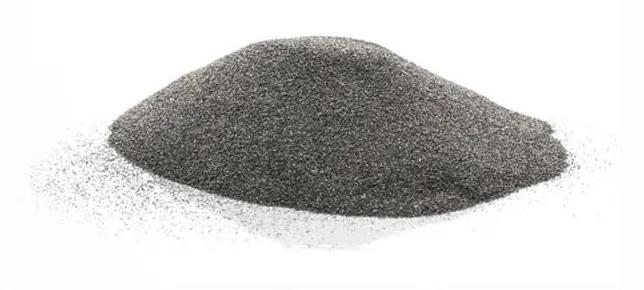
The applications of iridium are diverse, reflecting its unique properties. Due to its exceptional heat resistance, it finds application in making spark plugs and other high-temperature devices in the electronics industry. Its resistance to corrosion makes it a preferred choice for equipment exposed to harsh environments.
In the realm of medical technology, iridium is crucial for crafting surgical instruments, including stents. Iridium-192, a radioactive isotope, is also employed in brachytherapy, a form of internal radiation for cancer treatment.
The aerospace sector also benefits from iridium, using it for making crucibles and other equipment that can withstand extreme temperatures. Its high melting point makes it ideal for this purpose.
Surprisingly, over 20% of the global iridium consumption is attributed to the chlor-alkali process, essential for producing chlorine, which subsequently is vital for PVC material production.
Furthermore, iridium plays a pivotal role in several emerging technologies. For instance, it’s a key component in organic light-emitting diodes (OLEDs). The metal’s significance is also evident in the production of PEM electrolyzers, devices crucial for generating “green hydrogen.” In this context, iridium, in conjunction with platinum, is employed to coat the necessary catalysts.
Where is Iridium Produced?
Iridium occurs in such minute quantities that it doesn’t form deposits. Instead, it’s obtained as a by-product in platinum mining, which is intrinsically linked to the extraction of other metals like copper, iron, nickel, tin, and lead.
The global production of iridium is relatively limited, with an annual output hovering around 7 tons (i.e., about one truckload). The lion’s share of this production originates from mines in South Africa. Russia and Canada also have some notable deposits, while smaller reserves are found in the US (Alaska), Brazil, and Australia.
What Factors Determine the Price of Iridium?
Its supply and demand dynamics influence the pricing of iridium. The growing demand in the aerospace, electronics, and medical sectors drives its price. Additionally, the rarity of the metal and the challenges in mining it add to its value.
Supply disruptions, geopolitical tensions, and mining challenges in major producing regions can lead to price volatility. As with platinum, the iridium market is also susceptible to external shocks, making it essential for investors to stay informed.
Iridium Price Forecast
Forecast last updated: .
At a glance
- Strong price momentum: SMI displays $329.09 per gram on October 13. Its calculated gain is 101.37% this year, following a 4.57% increase in 2025.
- Constrained supply: Iridium is recovered alongside other platinum-group metals, predominantly in South Africa. Higher iridium prices alone cannot quickly bring new mine production online.
- Industrial demand with hydrogen upside: Established uses in electrodes, electronics, and specialist equipment are increasingly joined by hydrogen-production projects.
- Outlook: Constructive over the medium and long term, with greater short-term correction risk after the substantial repricing.
What changed for Iridium in 2026
The change is no longer just a promising demand pipeline: Iridium's price has more than doubled this year. That strengthens the evidence of market sensitivity, while raising the entry price for new investors.
Johnson Matthey’s May 2026 market report forecasts primary supply of 229,000 troy ounces against net industrial demand of 240,000 ounces, a modest shortfall. It also identified strategic buying, particularly in China, as a drain on available market liquidity. These are annual estimates, not a measurement of October inventories or proof that industrial consumption has doubled.
Hydrogen deployment is becoming tangible. In August, RWE reported the first hydrogen deliveries from Lingen to Evonik’s Marl site during commissioning. Its initial 200-megawatt proton exchange membrane (PEM) electrolysis installation illustrates real progress beyond announcements, although full commercial operation was still being prepared.
What this means for Iridium
Supply, however, remains the persistent challenge. Iridium’s small share of broader mining operations limits producers’ ability to respond to price alone. With production already limited, even small disruptions can trigger sharp price movements.
The demand story also extends beyond hydrogen. Iridium supports durable industrial electrodes, high-temperature crystal-growing equipment, spark plugs, and specialised electronic materials. PEM electrolysers use iridium-based catalysts to help split water into hydrogen and oxygen; this creates additional growth potential without making every hydrogen project an iridium customer.
The investment case remains the combination of difficult supply expansion and valuable industrial applications. Recycling, material savings, and customer inventories can nevertheless soften shortages. Scarcity supports the opportunity, but does not establish a permanent price floor.
Price drivers tilting upward
- PEM projects moving into service: Equipment manufacturing and subsequent expansion create demand for catalyst material. Project orders and deliveries matter more than headline hydrogen targets.
- Established industrial requirements: Electrodes used in chemical processing and copper-foil manufacturing provide demand alongside newer clean-energy applications.
- Concentrated production: Disruption to major South African mining or refining operations can affect a market with few alternative primary suppliers.
- Stock-building: Purchases to secure future supplies can tighten immediately available material in this small market.
Potential headwinds to watch
- Hydrogen delays: The IEA’s 2026 review records continued deployment, but also project cancellations, financing barriers, and uncertain customer demand. Announced capacity is not guaranteed metal consumption.
- Using less metal: Manufacturers are developing catalysts with lower iridium content. Recycling and competing electrolysis technologies can also reduce primary-metal requirements.
- Price-sensitive customers: Higher costs encourage substitution, delayed purchasing, and use of existing inventories. Some chemical applications already face competition from alternative catalysts.
- Correction and resale risk: After a gain exceeding 100%, weaker buying could produce a substantial reversal. A small specialist market can make selling slower or costlier than headline valuations suggest.
Iridium 6–12 month forecast view
Bias: Firm but volatile, with meaningful correction risk.
Rationale:
Limited readily available supply and industrial purchasing can support elevated prices. However, much of the scarcity story may already be reflected in the valuation. Continued strength would be more convincing if supported by fresh orders and persistent delivery constraints; another rapid doubling should not be the base case.
12–24 month forecast view
Bias: Constructively bullish, conditional on project delivery.
Rationale:
Further PEM equipment orders alongside established industrial uses could place additional pressure on a supply base that expands slowly. The strongest case depends on deployment growing faster than reductions in iridium use per unit, recycling, and supply improvements. Delays could interrupt that progression.
3–5 year forecast view
Bias: Constructive, with significant supply-constrained upside potential.
Rationale:
Fraunhofer’s July 2026 study for DERA identifies iridium as particularly exposed to potential demand growth from water electrolysis. Its scenarios extend through 2045, beyond this forecast window, and describe possible development paths rather than guaranteed outcomes or price forecasts. They reinforce the strategic case, while progress in efficient material use will help determine how much additional metal is actually needed.
Why physical Iridium fits the Strategic Metals Invest framework
- A genuinely small supply base: Ownership provides exposure to a metal whose production cannot quickly respond to its own price.
- Established uses plus emerging demand: Industrial electrodes and specialist equipment underpin a broader opportunity that includes PEM hydrogen technology.
- Material buyers need: Iridium’s performance in demanding chemical and high-temperature environments gives it value beyond its rarity.
- Direct long-term exposure: Physical holdings participate in the metal’s price development without depending on a single mining or hydrogen company’s execution.
For physical investors, industrial-grade quality, documented ownership, and a credible resale route remain essential. The opportunity suits a medium- to long-term perspective, with purchase costs, selling terms, and the higher starting valuation weighed carefully.
How to Buy Iridium
For those interested in investing in iridium, there are a few options. Physical iridium can be purchased from several sources, though it’s crucial to ensure the authenticity and purity of the metal. As a distinguished global metals dealer, our certified iridium meets the highest industry standards (min. min. 99.9% Major Brand), ensuring every ounce is genuine. We’re a pivotal intermediary trusted by all industry buyers.
Besides physical iridium, investors can also consider futures contracts, allowing them to buy or sell the metal at a predetermined price in the future.
How to Sell Iridium
Before selling, getting the metal assayed is advisable to determine its purity. This instills confidence in potential buyers and ensures a fair transaction.
If you purchased and held your iridium with us, liquidating your iridium assets is seamless and efficient, as we take care of everything.
We pride ourselves on our commitment to transparency. We go above and beyond to provide buyers with comprehensive documentation, including a complete chain of custody, purity reports, and evidence of proper storage facilities. This documentation is not just a box to check; it’s crucial for industry buyers and essential for a seamless selling process. Plus, with our strong industry connections, you can trust you’re getting the best price for your iridium.
In the strategic precious metals domain, trust is paramount. By collaborating with us, you’re ensuring that your investments are not only safeguarded but also primed to yield optimal returns when you decide to sell.
1 This price is based on the latest available industry-partner price for Iridium, dated Oct 12 2026. Prices may be carried forward until a newer market price becomes available. Currency conversions use the latest available ECB exchange rate.
Calculations on this page last updated Oct 16 2026.