


Palladium Prices
The current price of Palladium is $37.21 per gram.
Price as of Oct 16 2026. 1 The price provided above is the retail price for private investors and is aligned with industry retail pricing. For bulk palladium purchases, whether investment or industry, please contact us directly for a quotation.Table: Palladium Historical Prices and Price Changes
| Date | Palladium Price | Change % to Today | Annual Change % |
|---|---|---|---|
| Oct 16 2026 | $37.21 / g | ||
| Jan 1 2026 | $55.38 / g | –32.81% | |
| Jan 1 2025 | $31.74 / g | +17.24% | +74.48% |
| Jan 1 2024 | $41.29 / g | –9.88% | -23.13% |
| Jan 1 2023 | $63.67 / g | –41.56% | -35.15% |
| Jan 1 2022 | $69.49 / g | –46.46% | -8.38% |
| Jan 1 2021 | $82.89 / g | –55.11% | -16.17% |
| Jan 1 2020 | $67.20 / g | –44.63% | +23.35% |
| Jan 1 2019 | $44.97 / g | –17.27% | +49.43% |
| Jan 1 2018 | $37.85 / g | –1.69% | +18.81% |
Palladium Historical Price Movement
At today’s price of $37.21 per gram, palladium has changed –32.81% so far this year. This precious metal has gained +17.24% since the start of 2025 and –9.88% since the start of 2024. Since Jan 1st 2022, it has lost –46.46%.
Compared to its price of $67.20 per gram on Jan 1st 2020, palladium has lost –44.63% today. If we go back further to Jan 1st 2018, when the cost of one gram of palladium was $37.85, then this strategic precious metal’s price increased –1.69%.
In order to forecast palladium’s future price direction, let’s explore its various applications and where it’s produced (click here to jump to the forecast).
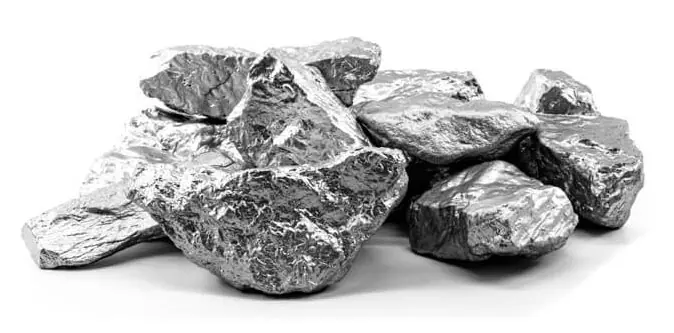
Palladium is a lustrous, silvery-white metal part of the platinum group metals. It’s known for its ductility, malleability, and ability to withstand oxidation and corrosion. It has the chemical symbol Pd and an atomic number of 46.
Palladium Uses
Palladium’s primary use is in the automotive industry, where it plays a crucial role in manufacturing catalytic converters. These devices reduce the harmful emissions from vehicles, making palladium an essential element for environmental protection. Interestingly, about 85% of palladium’s demand comes from this sector, underlining its importance in automotive manufacturing.
Palladium could also be used in fuel cells as an electrode material and in hydrogen cars as a storage material for hydrogen in the future.
In the field of electronics, palladium is used in various components, such as multilayer ceramic capacitors, which are integral to consumer electronics. Its excellent electrical conductivity makes it valuable for plating electronic components.
Palladium also finds application in dentistry, where it’s used for dental alloys due to its biocompatibility and strength. These qualities make it an excellent choice for dental restorations and equipment.
In the jewelry industry, palladium is appreciated for its natural white color, which does not tarnish over time. Its use in fine jewellery, including rings and watches, has been increasing, offering an alternative to platinum and gold.
Where is Palladium Produced?
Russia and South Africa are the world’s largest producers of palladium, accounting for more than 80% of the worldwide production. These countries hold significant reserves of this strategic precious metal, thereby playing a critical role in its global availability and price. Canada, Zimbabwe, and the United States also contribute to global palladium production.
Since the pure palladium deposits are already largely exhausted, mining is concentrated on extraction together with other metals such as nickel, copper, lead, or platinum.
In 2022, global palladium production was approximately 210 metric tons, with a further 90 tons recovered via recycling, mainly from automotive catalysts, covering the annual demand. Demand has consistently outstripped supply in recent years, so the market has reacted with enormous price increases.
What Factors Determine the Price of Palladium?
A combination of supply and demand dynamics influences palladium prices. The automotive industry’s demand significantly impacts its price. As emission standards become more stringent globally, the demand for palladium in catalytic converters rises, pushing its price higher.
Supply-side factors include mining output from major producers like Russia and South Africa. Political and economic stability in these regions can greatly affect the availability and price of palladium. Additionally, the recycling rate of palladium from used catalytic converters also plays a role in determining its market price.
Palladium Price Forecast
Forecast last updated: .
At a glance
- A substantial pullback: SMI displays $37.32 per gram, down 32.61% in 2026, using its October 14 market-reference price. This follows a 74.48% gain in 2025.
- Industrial demand remains substantial: Petrol vehicles and hybrids still need exhaust catalysts, while electronics and chemical manufacturing provide additional uses.
- Supply remains concentrated: Russia and South Africa dominate primary production. Recycling helps meet demand, but cannot immediately replace disrupted mine output.
- Outlook: Recovery potential remains, particularly if supply disappoints. A lasting rebound depends on whether production restraint and substitution gains outweigh weaker automotive demand and rising recycling.
What changed for Palladium in 2026
Palladium’s 2025 recovery has partially reversed. Palladium’s price remains 17.60% above the start of 2025, but the latest decline calls for reassessing the earlier bullish outlook. Recovery would need support from demand, supply, or renewed buying; previous highs alone do not establish fair value.
Market-balance forecasts differ. Johnson Matthey’s May outlook anticipated a small 2026 surplus as demand weakened and recycling recovered. The September Heraeus/SFA assessment instead forecast a 345,000-ounce deficit before exchange-traded fund flows. These estimates use different assumptions and investment treatments; neither is a measurement of immediately available October stocks.
Trade-policy fears also need updating. The USITC’s May 29 decision meant the Russian unwrought-palladium investigations would not result in antidumping or countervailing duty orders. Sibanye-Stillwater subsequently appealed, leaving a policy risk rather than an established tariff-driven shortage.
What this means for Palladium
Despite the long-term shift toward electric vehicles, global combustion-engine production is still substantial. Hybrids preserve a market for palladium because they retain an engine and exhaust system. However, their continued relevance does not mean total automotive palladium consumption is growing.
Relative prices offer another source of support. When platinum costs more, manufacturers have an incentive to use more palladium in suitable catalyst formulations. This can recover some demand previously lost to platinum, although redesign and qualification take time.
On the supply side, palladium remains vulnerable to geopolitical and operational risks. Implats’ latest results highlighted lower output at its Canadian operation and tighter second-half metal availability from processing-maintenance schedules. Conversely, Sibanye-Stillwater announced an agreement ending its US strike on October 7, with employees expected back on October 9. Disruption risks should therefore be assessed individually.
Price drivers tilting upward
- Persistent petrol and hybrid demand: Emissions control remains a large, established use that will not disappear overnight.
- Substitution can work in palladium’s favour: Its price relationship with platinum can encourage renewed use in qualified automotive catalysts.
- Slow supply adjustment: Much production is tied to nickel, copper, or other platinum-group metals. Higher palladium prices alone cannot quickly deliver new output.
- Demand beyond exhaust systems: Electronic components, plating, and chemical catalysts broaden the industrial base. These applications support demand beyond autocatalysts.
Potential headwinds to watch
- Battery-only vehicles: Their growth removes exhaust-catalyst demand. Weaker overall vehicle production would compound that pressure.
- More recovered metal: Rising scrappage and better collection can increase supply from used catalysts, even when mining is constrained.
- Demand-sensitive pricing: Economic weakness, investor selling, and inventory releases can outweigh annual supply deficits.
- Supply recovery: Returning production, mine-life extensions, and new projects could ease shortages. Permanent disruption should not be assumed.
Palladium 6–12 month forecast view
Bias: Neutral to cautiously constructive, with scope for a volatile recovery.
Rationale:
The price retreat leaves room for renewed buying if automotive demand stabilises or physical availability tightens. Forecasts for lower primary supply support that possibility, but improving recycling and softer demand limit confidence in a sustained rally. A deficit forecast alone is insufficient to predict rising prices.
12–24 month forecast view
Bias: Recovery potential, conditional on supply remaining disciplined.
Rationale:
Hybrid production and substitution back toward palladium could support consumption while ageing operations constrain output. However, WPIC’s June projections anticipate a transition to surplus from 2027, partly through stronger recycling. That scenario would restrain recovery; slower scrap flows or further mine reductions would improve the upside case.
3–5 year forecast view
Bias: Selective cyclical upside, with substantial transition risk.
Rationale:
Palladium can still experience powerful rallies if mine supply contracts faster than demand. Longer-term performance depends on the vehicle mix, recycling, and replacement production. Electronics and chemical uses provide support, but cannot yet be assumed to replace lost automotive consumption. A return to historical peaks is not the base case.
Why physical Palladium fits the Strategic Metals Invest framework
- Established industrial necessity: Ownership provides exposure to emissions-control and specialist manufacturing demand.
- A recovery opportunity: The pullback offers a lower published valuation than at the start of 2026, alongside genuine demand-transition risks.
- Concentrated production: Dependence on a few producing regions creates potential for sharp repricing when availability tightens.
- Direct metal ownership: Physical holdings offer participation in palladium’s price cycle without relying on an individual miner’s operating performance.
The case suits patient investors comfortable with volatility. Recognised purity, documented ownership, storage arrangements, and clear resale terms matter, as do purchase costs and the difference between buying and selling prices.
How to Buy Palladium
Investors interested in palladium can purchase it in physical form, such as bars or coins. It’s crucial to ensure the authenticity and purity of palladium products, so buying from reputable dealers is recommended.
As one of the world’s leading metals dealers, our certified palladium meets the highest industry standards (min. 99.95% Major Brand), ensuring every ounce is genuine. We’re a pivotal intermediary trusted by all major industry buyers like BMW, Ford, and Honda. We also offer investors the option to safely store their palladium holdings in our high-security storage bunker.
Palladium futures contracts are another avenue for investment. These contracts allow investors to speculate on the future price of palladium, offering a way to hedge against market volatility. They can be traded on various commodity exchanges worldwide.
How to Sell Palladium
When selling palladium, verifying its purity is essential. Getting the metal assayed helps determine its value and assures potential buyers of its quality.
Partnering with a reputable dealer can simplify the selling process for those who own palladium, especially in large quantities or as part of an investment portfolio. Investors who buy and store their palladium holdings with us benefit from our strong industry connections, meaning they can quickly liquidate their assets at the best possible market rate.
1 This price is based on the latest available market-reference price for Palladium, dated Oct 16 2026. Prices may be carried forward until a newer market price becomes available. Currency conversions use the latest available ECB exchange rate.
Calculations on this page last updated Oct 16 2026.