
Weekly News Review January 12 – January 18 2026
January 18, 2026
Weekly News Review January 19 – January 25 2026
January 25, 2026
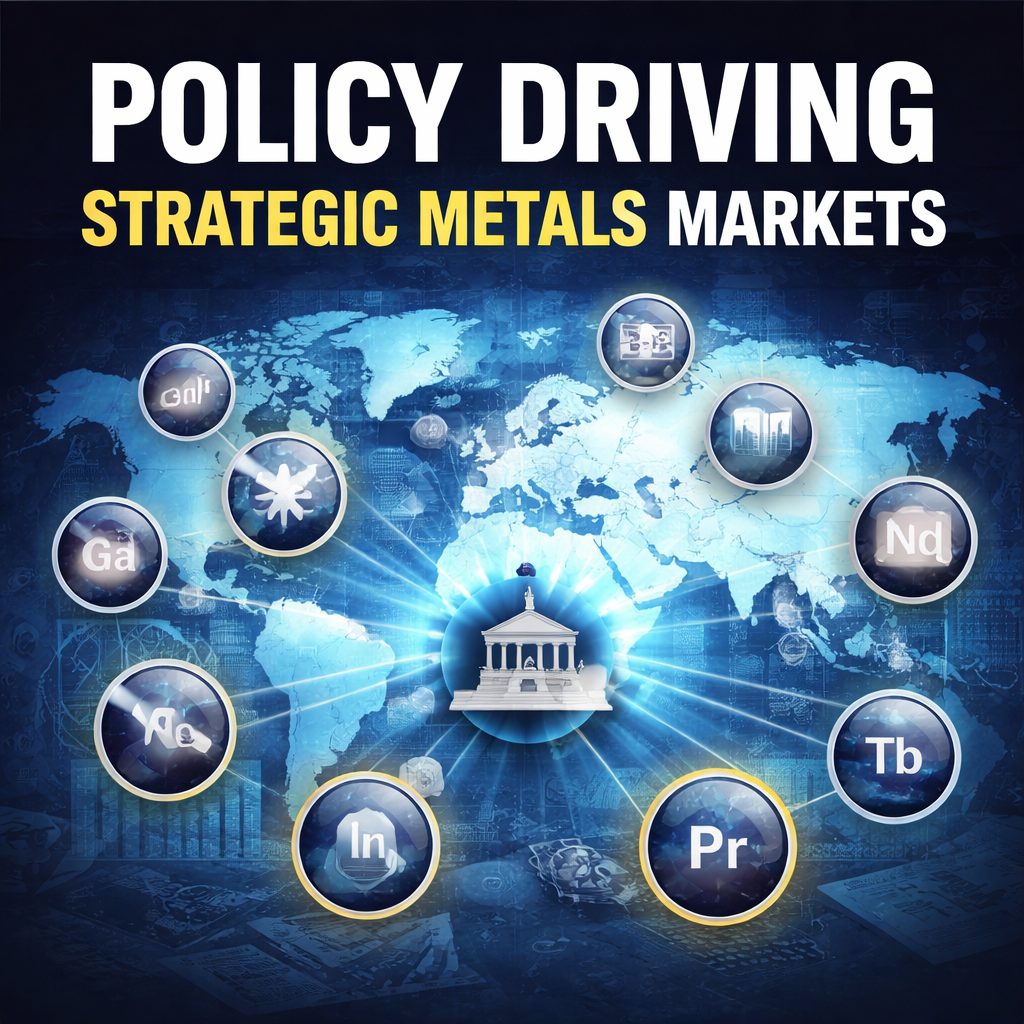
This article examines how structural changes in supply, access, and demand are shaping strategic metals markets as we enter 2026.
Last week, we looked back at how strategic metals performed in 2025. The response to that review confirmed something we’ve long believed: when this market is explained clearly and without hype, it becomes far easier to understand, even for those new to it.
This week, we want to take the next logical step.
Rather than focusing on price movements, we’d like to look at what has already changed structurally as we entered 2026, because those shifts matter regardless of where prices move next.
From Volatility to Control
One of the most important developments over the past two years is that export controls, licensing regimes, and selective access are no longer exceptional events. They have become part of the landscape.
In 2025, these measures were often discussed as temporary disruptions. Entering 2026, it is clear they are now embedded features of how strategic metals are managed globally.
This does not just affect pricing. It affects availability, access, and planning, particularly for industries that rely on these materials to keep production lines moving.
Availability Is Becoming the Key Variable
Strategic metals have never behaved like exchange-traded commodities, but that distinction is becoming more visible.
In several cases last year, material availability tightened even while published reference prices lagged behind real-world demand. In others, access to certain metals was temporarily paused altogether as industrial needs took priority.
What this illustrates is simple. In strategic metals, the market is increasingly shaped by who needs material, when they need it, and how quickly it can be delivered, not just by quoted prices.
Industry and Governments Are No Longer Passive
Another clear shift entering 2026 is the growing involvement of governments and institutions.
Strategic stockpiling, defence-related procurement, and domestic processing initiatives are no longer abstract policy goals. They are actively influencing how material flows through the market.
This is one reason strategic metals are now regularly described as critical infrastructure inputs, rather than optional raw materials.
Why This Matters
The key takeaway as we move into 2026 is not about predicting prices.
It is about recognising that the strategic metals market now operates under a different set of rules than it did even a few years ago. These rules are shaped by supply security, industrial priorities, and long-term planning rather than short-term trading.
Over the coming weeks, we will look more closely at how these dynamics play out:
- why availability can matter more than published prices,
- how industry demand expresses itself in practice,
- and what makes certain metals more relevant than others at different points in time.
As always, please don’t hesitate to contact us if you’d like to discuss how physical strategic metals can be added to your portfolio.