


Tellurium Prices
Current Tellurium price: $132.00 per kg.
Price as of Oct 14 2026. 1 The price shown above is the retail price for private investors and is aligned with industry retail pricing. For bulk tellurium purchases, whether for industrial use or investment, please contact us for a quotation.Tellurium price performance over time
| Period | Tellurium price then | Change to today |
|---|---|---|
| Current price | $132.00/kg | — |
| 1 year | $248.24/kg | -46.83% |
| 2 years | $152.77/kg | -13.60% |
| 3 years | $118.67/kg | +11.23% |
| 5 years | $140.49/kg | -6.04% |
Tellurium Historical Price Movement
Tellurium prices have become increasingly shaped by the tension between growing clean-energy demand and structurally limited supply.
At today’s price of $132.00 per kg, tellurium is down 39.89% year to date, down 9.56% since the start of 2025, up 2.96% since the start of 2024, and up 2.96% since the start of 2022, when the tellurium price stood at $128.21 per kg.
This reflects tellurium’s role in solar energy, electronics, metallurgy, and other advanced industrial applications, combined with a market that depends heavily on by-product recovery from copper refining and remains sensitive to export controls and processing bottlenecks.
Tellurium annual price performance
| Current Tellurium Price/kg |
2026 YTD | 2025 | 2024 | 2023 | 2022 |
|---|---|---|---|---|---|
| $132.00 | -39.89% | 50.46% | 13.84% | -1.06% | 1.07% |
To better understand tellurium’s future price potential, let’s explore its key applications and the sources of global production (click here to jump to the forecast).
Tellurium is a rare technology metal that is primarily produced as a by-product of copper refining. It is characterised by its brittle nature, metallic lustre, and semiconducting properties, and is typically silvery-white in appearance. Tellurium is identified by the chemical symbol Te and atomic number 52.
Tellurium Uses
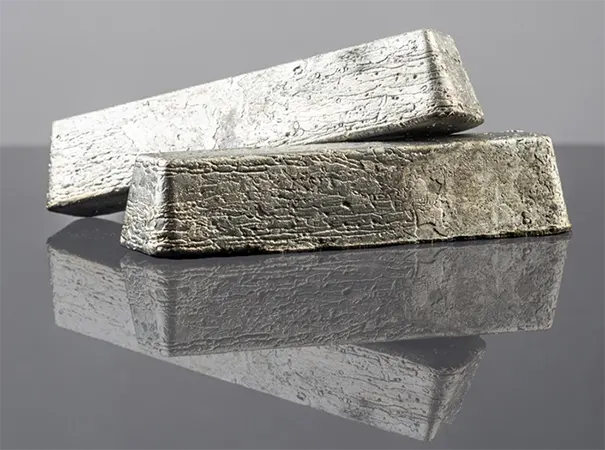
The applications of tellurium are closely tied to its unique electrical and chemical properties. As a semiconducting element, tellurium plays an important role in several advanced technologies, particularly where efficiency and performance are critical.
One of the most significant uses of tellurium is in thin-film solar cells, specifically cadmium telluride (CdTe) photovoltaic technology. These solar panels are widely used in large-scale solar installations due to their cost efficiency, high energy yield, and relatively low material intensity compared to conventional silicon-based panels.
Tellurium is also used in the electronics and semiconductor industries, where it improves conductivity and performance in certain alloys and compounds. It is applied in thermoelectric devices, which convert heat directly into electricity and are used in specialised power generation and cooling applications.
In metallurgy, tellurium is added in small quantities to steel, copper, and lead alloys to enhance machinability and material performance. These applications are particularly relevant in industrial manufacturing where precision and durability are required.
Beyond these established uses, tellurium is gaining importance in emerging technologies, including advanced electronics and energy storage systems. As demand for renewable energy and high-efficiency electronic components continues to grow, tellurium’s role as a critical enabling material is becoming increasingly strategic.
Where is Tellurium Produced?
Tellurium occurs in extremely low concentrations and does not form standalone deposits. Instead, it is produced almost exclusively as a by-product of copper refining, recovered from anode slimes during the electrolytic refining process. As a result, tellurium supply is inherently tied to global copper production rather than to demand for tellurium itself.
Global tellurium production is relatively small, with annual output estimated at under 1,000 tonnes. The majority of this production comes from China, which dominates both refining capacity and downstream processing. Smaller quantities are produced in countries with significant copper refining industries, including the United States, Japan, Peru, and Canada.
Because tellurium is dependent on copper output and concentrated refining infrastructure, supply cannot be scaled up quickly. This structural constraint plays a key role in shaping tellurium availability, and, by extension, its price behaviour.
What Factors Determine the Price of Tellurium?
Simply put, the price of tellurium is determined by the law of supply and demand, just as it is for other commodities.
Tellurium has become increasingly important to several industries. Rising demand for end products in these sectors, particularly solar energy, electronics, and advanced manufacturing, directly increases demand for this highly specialised metal.
On the supply side, tellurium is considered rare due to its limited natural availability and constrained production model. It occurs in very low concentrations and is produced almost exclusively as a by-product of copper refining. This means tellurium supply cannot be expanded independently and is largely fixed by copper production levels, making the market especially sensitive to shifts in demand and regulatory changes.
Tellurium Price Forecast
Forecast last updated: .
At a glance
- Price reset: SMI displays $132.00 per kg on October 13, based on its latest industry-partner valuation dated August 4, 2026. The page calculates a 39.89% decline this year, following a 50.46% increase in 2025.
- Industrial foundation: Cadmium telluride (CdTe), a semiconductor used in thin-film solar panels, remains the main demand driver. Specialist cooling devices and alloys provide additional uses.
- Supply sensitivity: Tellurium is mainly recovered during copper refining. China’s export licensing remains relevant, but recovery improvements and existing non-Chinese suppliers can add material.
- Outlook: Cautious near term after the sharp decline, with a constructive longer-term opportunity if industrial demand grows faster than available supply.
What changed in 2026
The price decline is the most important change for investors. Tellurium's price is now 9.56% below its level at the start of 2025. The lower valuation offers a less expensive entry point than the 2025 highs, but does not establish that the market has reached a bottom.
The solar-demand case remains tangible. First Solar’s second-quarter results presentation reported contracts for 45.1 gigawatts of solar panels at June 30, with deliveries extending through 2030. That supports its tellurium-based technology, although new contracted orders in the first half were below deliveries. Cancellations and manufacturing schedules can alter material purchases.
Alternative supply is already operating. In January, Rio Tinto confirmed the North American supply chain linking Kennecott, 5N Plus, and First Solar: tellurium recovered in Utah is processed into semiconductor material in Canada and used in solar panels. This is established production, not merely a proposed project.
China’s February 2025 controls continue to require licences for tellurium and specified tellurium products. They are not a blanket export ban, and their existence alone does not prove that every buyer faces a shortage.
What this means for tellurium
Tellurium remains a small, specialised market where changes in industrial orders or material availability can have disproportionate price effects. Its role in CdTe thin-film solar cells continues to anchor long-term consumption. Beyond solar energy, demand is supported by precision cooling, heat-to-electricity devices, and specialty alloys.
Supply is constrained, but not permanently fixed by copper production. Refiners can recover more tellurium from material they already process. The U.S. Department of Energy’s technology assessment identifies improved recovery, recycling, and more efficient material use as ways to support solar manufacturing. Investors therefore need to assess both demand growth and the industry’s ability to respond.
Price drivers tilting upward
- Large-scale solar demand: CdTe panels offer an established alternative to silicon technology, with useful performance characteristics in hot conditions. Continued deployment supports tellurium consumption.
- Difficult supply expansion: Suitable copper-processing residues, recovery equipment, and refining expertise are needed before additional tellurium reaches customers.
- Policy sensitivity: Chinese export licensing can affect delivery timing and encourage buyers to secure alternative sources.
- Specialist electronics: Tellurium compounds are used in devices that provide precise cooling or convert heat into electricity. Alloying applications add a separate industrial demand base.
Potential headwinds to watch
- Solar purchasing cycles: Financing costs, project delays, policy changes, and cancelled orders can weaken demand even when long-term electricity needs are growing.
- Technology competition: Most solar panels use silicon, so total solar-market growth does not translate directly into tellurium demand.
- Recovery and recycling: Better extraction from copper-processing residues, plus recovery of manufacturing scrap or retired panels, can increase supply. Retired-panel volumes grow gradually because much of the installed fleet is still young. Using less tellurium per watt also reduces demand growth.
- Concentrated buying: A small number of major industrial customers can materially affect orders and inventories. The recent price decline shows that scarcity does not prevent substantial losses.
6–12 month forecast view
Bias: Neutral, with potential for stabilisation and renewed volatility.
Rationale: The industrial demand base remains intact, but the decline argues against assuming an immediate rebound. Clearer evidence of firmer buying, tighter available inventories, or shipment disruption would strengthen the recovery case. Further weakness remains possible.
12–24 month forecast view
Bias: Cautiously constructive, conditional on demand growth.
Rationale: 5N Plus’s supply agreement with First Solar provides for increased cadmium-telluride volumes in 2027–2028, strengthening the demand case. Whether that lifts metal prices depends on purchasing growth exceeding additional recovery and recycled supply. Higher manufacturing output need not produce a shortage.
3–5 year forecast view
Bias: Constructive, supply-constrained upside case.
Rationale: Tellurium offers exposure to an established solar technology and specialised electronic applications. Its small supply base creates upside potential if these uses expand, while improvements in recovery, material efficiency, and competing solar technologies remain important counterweights.
Why physical tellurium fits the Strategic Metals Invest framework
- Specialised supply: Recovering tellurium requires dedicated processing; higher demand does not instantly produce more usable material.
- Policy sensitivity: Regulatory changes can materially affect pricing.
- Energy-transition relevance: Direct exposure to CdTe solar manufacturing, supported by additional uses in cooling devices and specialty alloys.
- Small-market dynamics: Modest shifts in demand or supply can drive outsized price moves, in either direction.
These characteristics preserve a distinctive medium- to long-term investment case after the price reset. Industrial-grade purity, traceable ownership, and a credible resale route matter for physical holdings. Purchase costs, selling terms, and the possibility of further price declines should be weighed alongside the opportunity.
How to Buy Tellurium
Companies such as First Solar, Intel, Panasonic, and LG rely on globally licensed specialty metals dealers when sourcing tellurium for industrial use. These trusted intermediaries serve as the link between high-tech manufacturers and producers of strategic and technology metals that underpin advanced electronics and clean-energy systems.
Smaller quantities of tellurium can sometimes be found via online platforms such as eBay, Alibaba, or Amazon. However, this route is generally suited to hobbyists or laboratory use rather than to industrial buyers or investors, as material purity, provenance, and resale options are often unclear.
Reputable metals dealers like ourselves provide full chain-of-custody documentation, guaranteeing industrial-grade purity (min. 99.99%) and traceability. We also arrange professional storage under controlled conditions, ensuring that investors can hold tellurium securely and maintain optimal resale potential over the long term.
Unlike some base or precious metals, tellurium is not traded on a liquid futures exchange. Pricing is determined through direct transactions within the industrial market, making access via established dealers essential for both transparency and reliability.
How to Sell Tellurium
For holders of industrial-grade tellurium, the only practical route to resale is through reputable industry suppliers. This is because professional buyers require verified chain-of-custody documentation, purity analysis, and traceability, which are typically only available when material has been sourced and stored through established market participants.
If tellurium was purchased via an online marketplace such as eBay, Amazon, or Alibaba, resale options are usually limited to other private buyers or hobbyists. In such cases, achieving prevailing industrial market prices is unlikely, as provenance, purity, and resale suitability cannot easily be verified.
By contrast, investors who hold tellurium through us benefit from clear resale pathways into the industrial market. Because the material is already documented, certified, and professionally stored, liquidation can typically be arranged efficiently and at prices aligned with current market conditions.
1 This price is based on the latest available industry-partner valuation for Tellurium, dated Aug 04 2026. Prices may be carried forward until a newer market price becomes available. Currency conversions use the latest available ECB exchange rate.
Calculations on this page last updated Oct 14 2026.