


A Critical Element Powering Solar and Advanced Technologies
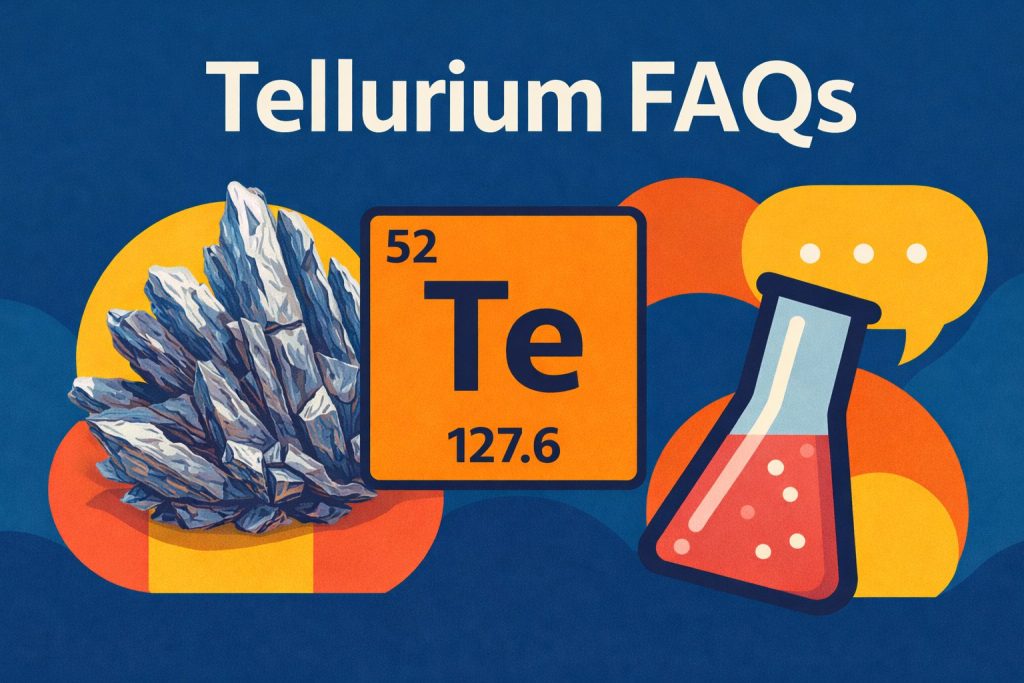
Tellurium is a rare metalloid with an outsized role in modern technology. Best known for its use in cadmium telluride (CdTe) solar panels, it plays a crucial part in renewable energy generation, advanced alloys, and specialised electronics.
Below, we answer the most frequently asked questions about tellurium, covering its properties, discovery, production, uses, and strategic importance.
🔬 Properties & Physical Behavior
Tellurium is a brittle, silvery-white metalloid with semiconductor properties. While it shares some characteristics with metals, it also behaves chemically like a non-metal, making it particularly useful in advanced electronic and photovoltaic applications.
Tellurium is element 52 on the periodic table, with the chemical symbol Te. It belongs to Group 16, known as the chalcogens, the same family as oxygen, sulphur, and selenium. It sits between antimony and iodine and is classified as a metalloid.
Tellurium appears as a silvery-grey, crystalline solid. It has a metallic lustre but is brittle and fractures easily. In pure form, it can form needle-like or crystalline structures.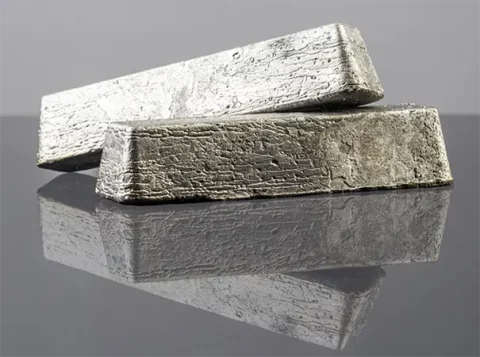
Elemental tellurium itself has little odour. However, certain tellurium compounds can produce a strong garlic-like smell. This is particularly associated with tellurium exposure, as the body metabolises it into compounds that produce this characteristic scent.
Tellurium copper is a copper alloy containing small amounts of tellurium. The addition improves machinability while maintaining high electrical conductivity, making it useful in electrical connectors and precision components.
📖 History & Discovery
Tellurium was discovered in 1782.
Tellurium was first identified by Austrian mineralogist Franz-Joseph Müller von Reichenstein. It was later named and confirmed as a new element by German chemist Martin Heinrich Klaproth.
Tellurium was discovered in Transylvania (now part of Romania) during the analysis of gold ore deposits.
Tellurium was named after the Latin word tellus, meaning “earth”. The name was chosen reflecting the element’s origin in mineral ores. The naming followed a common tradition at the time of drawing from classical languages when identifying newly confirmed elements.
🌍 Origin & Production
Tellurium is rarely found in its native form. It typically occurs in gold and copper ores, often combined with other elements. Today, most tellurium is recovered as a by-product of copper refining.
Tellurium is one of the rarer elements in the Earth’s crust. It is significantly less abundant than many base metals and cannot typically be mined directly. Its availability is closely linked to copper production.
Globally, tellurium production is concentrated in countries with large copper industries. China is currently the dominant producer, followed by Peru and Japan.
Here is the Tellurium equivalent, written in the same tone and structure, without over-speculating:
How much tellurium does the US have?
The United States has very limited primary tellurium production and relies largely on imports to meet domestic demand. Because tellurium is mainly recovered as a by-product of copper refining, supply depends on copper production rather than direct tellurium mining. Tellurium is recognised as a critical mineral due to its limited global production, supply concentration, and importance in solar energy and advanced technologies.
⚙️ Uses & Applications
Tellurium improves the performance of certain alloys and plays a critical role in semiconductor and photovoltaic materials.
Tellurium is most notably used in cadmium telluride (CdTe) solar panels, which are widely deployed in utility-scale solar power plants. It is also used in thermoelectric devices, alloys, and certain advanced electronics.
Tellurium is strategically important because of its role in renewable energy technology, especially thin-film solar modules. As global demand for clean energy expands, so does interest in securing stable tellurium supply.
Tellurium pricing depends on industrial demand and copper production dynamics. Because supply is limited and geographically concentrated, prices can fluctuate based on energy-sector demand and export policy developments. For current pricing information, visit our Tellurium price page.
🧪 Safety & Handling
Elemental tellurium has relatively low toxicity compared to many heavy metals. However, certain tellurium compounds can be hazardous and should be handled under controlled industrial conditions.
In its pure metallic form, tellurium poses limited risk under proper handling conditions. Industrial processing environments, however, require appropriate safety protocols.
💼 Buying, Investing & Storage
Small quantities of tellurium can sometimes be found through hobbyist suppliers, but these are generally unsuitable for industrial users or serious investors. Reputable specialist metals dealers offer tellurium in investment-grade purity, complete with full documentation and optional professional storage.
Tellurium isn’t traded on any exchanges, but you can invest in tellurium by physically owning it, either individually or as part of a diversified basket of strategic metals. Strategic Metals Invest provides a fully certified purchase process, secure tax-free storage, and a clear resale pathway back into industrial markets.
Tellurium should be stored in sealed industrial packaging to protect its integrity and maintain resale eligibility. For investors, professional storage in a high-security facility such as METLOCK in Frankfurt offers optimal protection, full documentation, insurance coverage, and readiness for industrial resale.
Tellurium may not be widely recognised outside industrial circles, but its importance is clear. As demand for solar energy, advanced electronics, and specialised alloys continues to grow, this rare element remains central to technologies shaping the global energy transition.
From its discovery in 18th-century Transylvania to its modern role in large-scale solar installations, tellurium has evolved into a strategically significant material. With supply limited and closely tied to copper refining, it occupies a unique position among critical raw materials.
If you’d like to learn more about tellurium or explore owning it as a tangible asset, our team of experts is here to assist you.