


Ruthenium Prices
Today’s price of Ruthenium is $77.02 per gram.
Price as of Oct 16 2026. 1 The price presented is the retail price for private investors and is aligned with industry retail pricing. For bulk purchases, whether industry or investment, please contact us directly for a quotation.Table: Ruthenium Historical Prices and Price Changes
| Date | Ruthenium Price | Change % to Today | Annual Change % |
|---|---|---|---|
| Oct 16 2026 | $77.02 / g | ||
| Jan 1 2026 | $48.68 / g | +58.21% | |
| Jan 1 2025 | $18.54 / g | +315.49% | +162.57% |
| Jan 1 2024 | $16.20 / g | +375.51% | +14.44% |
| Jan 1 2023 | $19.22 / g | +300.62% | -15.71% |
| Jan 1 2022 | $20.28 / g | +279.72% | -5.32% |
| Jan 1 2021 | $10.41 / g | +640.13% | +94.81% |
| Jan 1 2020 | $8.82 / g | +773.35% | +18.03% |
| Jan 1 2019 | $9.88 / g | +679.78% | -10.73% |
| Jan 1 2018 | $7.05 / g | +991.69% | +40.14% |
Ruthenium Historical Price Movement
At today’s cost of ruthenium, $77.02 per gram, the annual change so far is +58.21%. Compared to its price on January 1st 2025, this strategic precious metal gained +315.49%, and since the start of 2024, it is up +375.51%.
The price increase since January 2020 ($8.82 per g) is currently +773.35%. If we go back to January 1st 2018, when ruthenium was priced even lower at $7.05 per g, then the increase is as high as +991.69%.
Ruthenium Uses
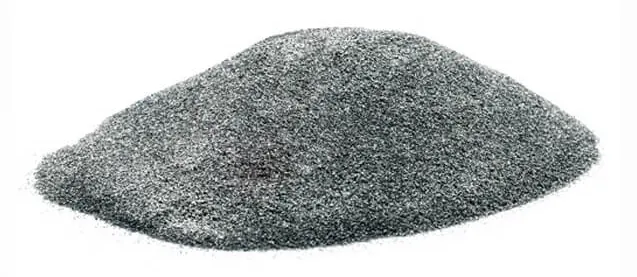
Ruthenium’s diverse applications stem from its exceptional properties. In the electronics industry, ruthenium is used as a hardening agent for platinum and palladium, making these metals more durable and wear-resistant.
Its high melting point and excellent conductivity make it a preferred choice for electrical contacts and thin-film resistors. Its use as a coating for hard disks or to reduce the size of integrated circuits means ruthenium is present in almost all data centers.
In the realm of catalysis, ruthenium also plays a pivotal role. It serves as a catalyst in various chemical reactions, including the production of ammonia and acetic acid. Its efficiency in promoting specific reactions has made it indispensable in the chemical industry.
The medical field also benefits from ruthenium. Its compounds are being explored for potential use in cancer treatments, specifically in photodynamic therapy. Additionally, ruthenium’s corrosion-resistant properties make it ideal for certain types of medical implants.
Furthermore, ruthenium finds its place in the emerging field of renewable energy. It is used in dye-sensitized solar cells, which are considered a promising alternative to conventional silicon solar cells. With the global push towards sustainable energy solutions, ruthenium’s role in this sector is bound to grow.
Where is Ruthenium Produced?
Ruthenium is primarily obtained as a by-product of platinum and nickel mining. Most of the world’s ruthenium production comes from South Africa, followed by Russia. With their rich mineral reserves, these countries play a crucial role in determining the global availability and, consequently, the price of ruthenium.
Given the rarity of ruthenium and its increasing demand, recycling, and efficient extraction methods are becoming more critical. The strategic importance of ruthenium is evident from its inclusion in various national lists of critical raw materials.

What Determines the Price of Ruthenium?
Its supply and demand dynamics influence the price of ruthenium. The electronics, chemical, and renewable energy sectors play a significant role on the demand side. As technology advances and the push for sustainable solutions intensifies, the demand for ruthenium rises.
On the supply side, challenges in mining, geopolitical tensions, and environmental concerns can impact the availability of ruthenium. Disruptions in major producing regions can lead to significant price volatility, making the ruthenium market susceptible to external factors.
Ruthenium Price Forecast
Forecast last updated: .
At a glance
- Further gains after a standout year: SMI displays $74.99 per gram on October 13. Its calculated increase is 54.05% this year, following a 162.57% rise in 2025.
- A continuing supply shortfall: Available primary supply remains constrained by ruthenium’s position as a minor by-product of platinum-group mining.
- Digital infrastructure matters: Hard-disk storage, electronic components, and selected advanced chip processes give ruthenium a tangible role in the expansion of computing.
- Outlook: Constructively bullish, with substantial volatility risk. Electronics strength must be weighed against weaker chemical demand and changing technology.
What changed for Ruthenium in 2026
Ruthenium quietly became one of 2025’s strongest performers. The advance has continued: Ruthenium’s price is now 304.57% above its start-of-2025 level. That is a substantial repricing, rather than an investment case still waiting to be recognised.
Johnson Matthey’s May 2026 report forecasts primary supply of 977,000 troy ounces against net industrial demand of 1,193,000 ounces. The resulting 216,000-ounce deficit is smaller than 2025’s estimated shortfall, but still significant. These are full-year forecasts, not a measurement of October stocks.
The demand picture is mixed. Johnson Matthey expected electrical demand to rise while weaker chemical purchasing reduced total demand. Strategic buying also affects availability. The rally therefore cannot be explained simply as every industrial use accelerating at once.
What this means for Ruthenium
The original technology-led investment case remains relevant. Ruthenium is used in hard-disk recording layers and electronic resistors, while its catalytic properties support chemical production and industrial electrodes. Cloud computing and artificial intelligence can expand the infrastructure using these materials.
Advanced chips add another opportunity. Applied Materials has documented commercial use of ruthenium-cobalt liners that help make microscopic copper wiring more efficient. This is a specific manufacturing application, rather than evidence that every AI chip requires large quantities of ruthenium.
Supply cannot respond quickly to ruthenium demand alone, because mine investment depends on the wider mix of metals produced. Nevertheless, processing improvements, recycling, and existing inventories can add available material. A tight market should not be confused with a market containing no stocks or alternatives.
Price drivers tilting upward
- Data storage and electronics: More computing infrastructure supports demand for ruthenium-bearing storage media and components. The benefit depends on the technologies manufacturers choose.
- Chip miniaturisation: Smaller, more energy-efficient circuits create opportunities for ruthenium in selected wiring processes.
- Slow primary-supply response: Concentrated production and complex refining mean additional demand cannot immediately be met by opening dedicated ruthenium mines.
- Security-of-supply buying: Industrial customers and other buyers building inventories can reduce metal available for immediate delivery.
Potential headwinds to watch
- Changing storage technology: Heraeus’s 2026 outlook flags the shift toward heat-assisted magnetic recording as a risk to ruthenium use. Growth in stored data need not translate into proportional growth in metal consumption.
- Chemical-industry cycles: Johnson Matthey expected excess capacity in China’s caprolactam industry, which supplies a nylon ingredient, to reduce catalyst purchasing in 2026. High prices also encourage alternative processes and more economical use of metal.
- Supply improvements: Better refining throughput and recovery of used material can ease shortages even without a major new mine.
- A higher starting valuation: After exceptional gains, softer orders or inventory releases could trigger a sharp correction.
Ruthenium 6–12 month forecast view
Bias: Constructively firm, with sharp two-way volatility.
Rationale:
The projected deficit and electronics demand support elevated prices. However, the smaller forecast shortfall and weaker chemical buying argue against extrapolating the previous rate of appreciation. Delivery conditions, customer orders, and the willingness of holders to sell will help determine whether tightness persists.
12–24 month forecast view
Bias: Bullish, conditional on sustained electronics demand.
Rationale:
Continued investment in computing and electronics manufacturing could keep pressure on a slowly expanding supply chain. The strongest upside case combines sustained demand for ruthenium-bearing products with limited inventory replenishment. A faster switch to lower-ruthenium storage designs or prolonged chemical weakness would temper it.
3–5 year forecast view
Bias: Constructive, with meaningful advanced-technology upside.
Rationale:
Ruthenium could gain additional applications as chipmakers tackle the limits of conventional wiring. Intel demonstrated promising ruthenium interconnect research in June 2026, but classified it as longer-term development. Commercial adoption could broaden demand; its timing, scale, and metal requirements remain uncertain. This supports upside potential without treating laboratory results as committed purchases.
Why physical Ruthenium fits the Strategic Metals Invest framework
- Exposure to digital infrastructure: Ruthenium connects physical-metal ownership with storage, electronics, and selected advanced semiconductor applications.
- Scarcity that is difficult to resolve quickly: Its by-product production model limits how rapidly mining can respond to stronger demand.
- More than a single technology: Resistors, industrial catalysts, and electrodes complement the computing story, although their purchasing cycles differ.
- Potential beyond the current cycle: Emerging chip applications could add value over time, providing a distinct long-term rationale for holding the metal.
Physical ownership offers direct participation in ruthenium’s price development. Industrial-grade purity, documented provenance, and an established resale route are important in this specialist market. A medium- to long-term perspective helps frame the opportunity, while costs and the risk of substantial price declines still require attention.
How to Sell Ruthenium
When selling physical ruthenium, ensuring its purity is of utmost importance. It’s advisable to get the metal assayed before selling. Industry buyers will only buy ruthenium from reputable suppliers who can provide full chain of custody and purity reports.
In case you purchase and store your ruthenium with us, the process of liquidating your assets is streamlined and efficient. Our commitment to transparency, comprehensive documentation, and strong industry connections ensure your investments are in safe hands and poised to yield optimal returns when the time comes to sell.
How to Buy Ruthenium
For those interested in investing in ruthenium, several options are available. Physical ruthenium can be purchased from various sources, including eBay and Alibaba. Ensuring the authenticity and purity of the metal is crucial, though. In the world of strategic precious metals, trust and reliability are paramount.
By choosing a certified industry supplier like ourselves, you’re not just buying ruthenium but investing in a metal of guaranteed purity, adhering to the highest industry standards.
Apart from physical ruthenium, investors can also explore futures contracts.
1 This price is based on the latest available industry-partner price for Ruthenium, dated Oct 12 2026. Prices may be carried forward until a newer market price becomes available. Currency conversions use the latest available ECB exchange rate.
Calculations on this page last updated Oct 16 2026.