
Weekly News Review February 2 – February 8 2026
February 8, 2026
Weekly News Review February 9 – February 15 2026
February 15, 2026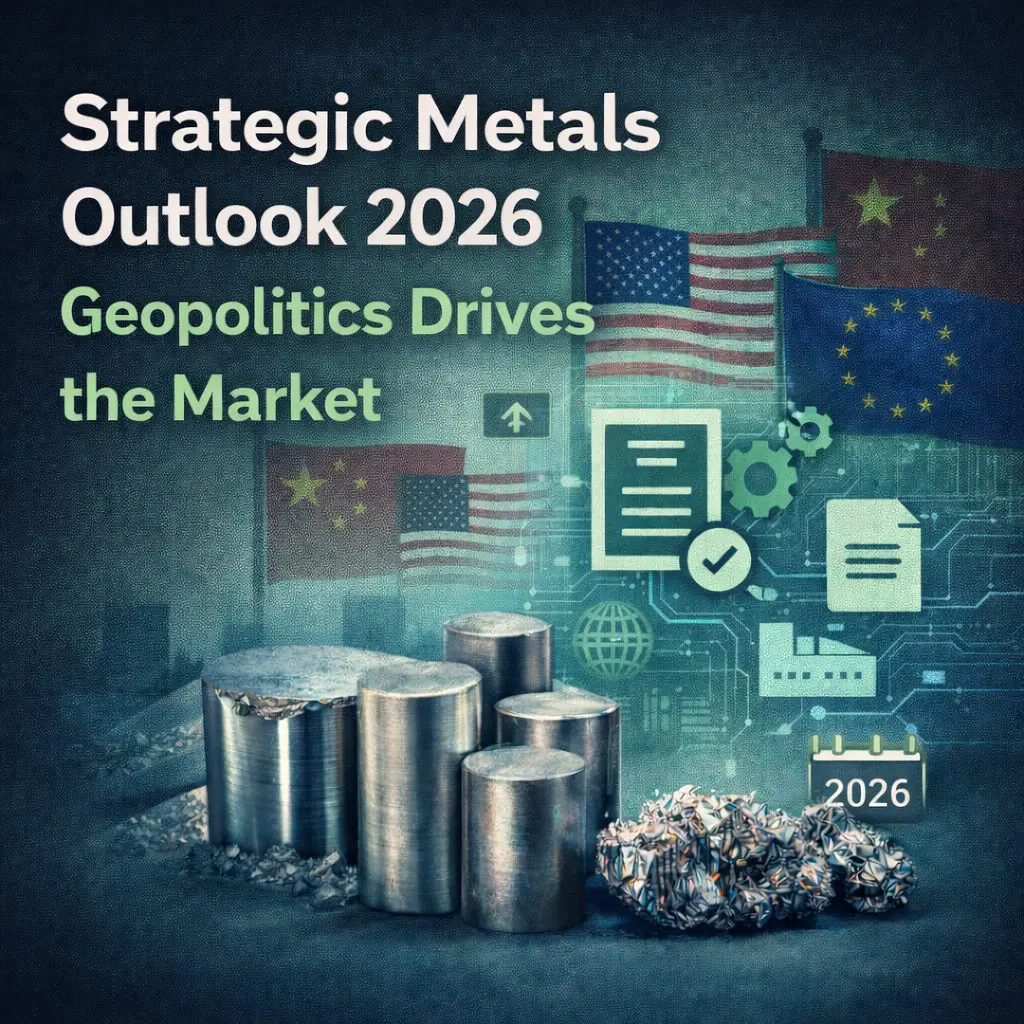
This market outlook examines how geopolitical tensions, export controls, and government stockpiling are influencing strategic metals markets in 2026.
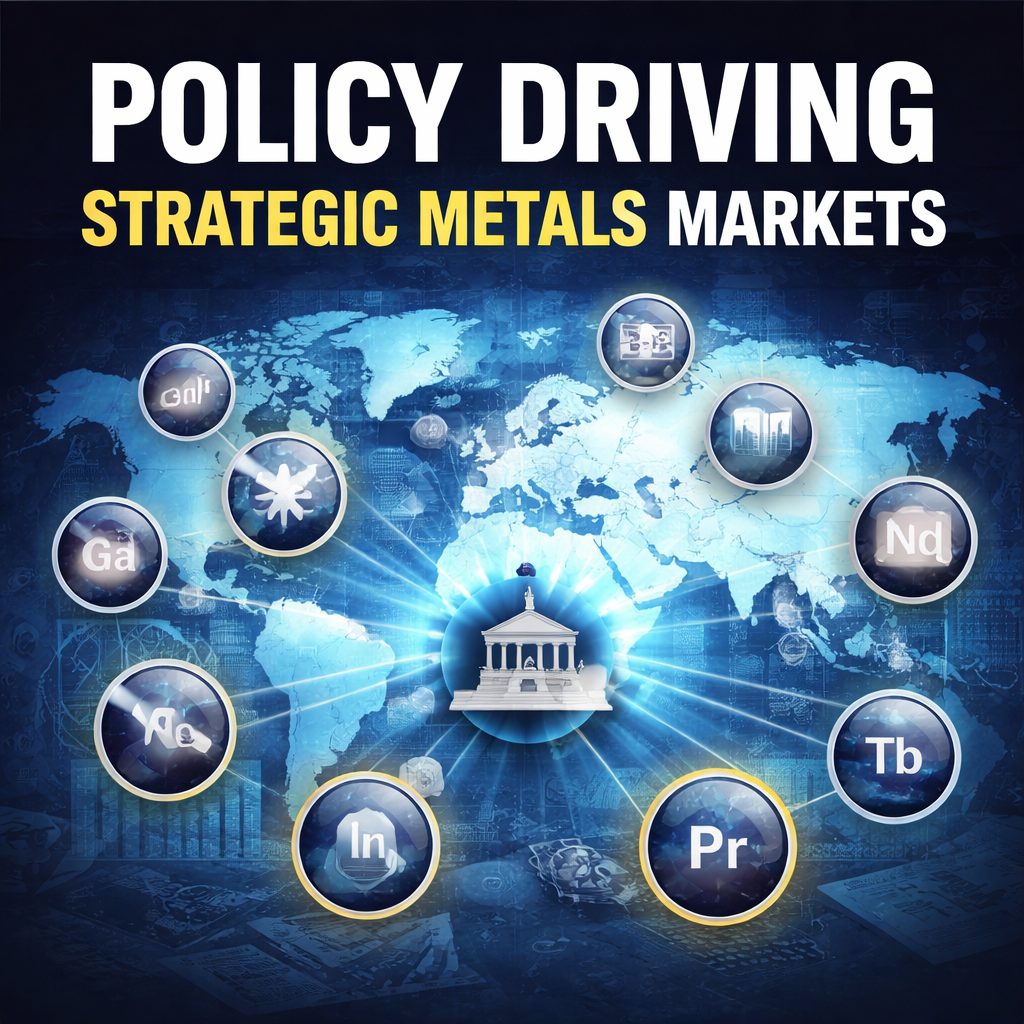
As we move further into 2026, one development is becoming increasingly clear: markets for critical raw materials are no longer governed solely by classical supply-and-demand cycles. Security considerations and industrial policy objectives are now playing a decisive role in price formation.
With the Chinese New Year running from February 17th to March 3rd, markets typically enter a temporary slowdown. Activity pauses, shipments delay, and prices can soften briefly as trading volumes thin.
This year, however, broader structural forces appear to be overshadowing seasonal patterns.
Politics at the Center of Market Dynamics
Export controls, licensing requirements, and direct government intervention are increasingly shaping access to raw materials, often with immediate consequences in already tight markets.
In January 2026, China further tightened dual-use export controls toward Japan. Rare earth supply chains remain particularly sensitive, given Japan’s dependence on Chinese supply. Even the announcement of additional restrictions was interpreted by industry as a potential supply risk for automotive, electronics, and magnet production.
China is also exercising growing administrative control over selected technology metals. In the case of antimony, exports for 2026 and 2027 are reportedly restricted to eleven state-approved companies. Export volumes are therefore influenced less by price signals and more by regulatory approvals. In by-product markets with limited primary production, such measures can amplify scarcity dynamics.
Strategic Stockpiling Accelerates
Government stockpiling is becoming a measurable force in raw material markets.
Australia has outlined plans for a strategic minerals reserve of approximately USD 1 billion, focusing on antimony, gallium, and rare earths. In Europe, the Critical Raw Materials Act continues to advance, with over 160 project applications submitted in the latest funding round. Structural challenges such as permitting, financing, and processing capacity, however, remain limiting factors.
In the United States, “Project Vault” is expected to mobilize approximately USD 12 billion to reduce reliance on China and strengthen domestic supply chains. Through offtake agreements, price support mechanisms, and long-term contracts, the initiative aims to promote mining and processing of strategic metals at scale.
From Price Cycles to a Policy Premium
For holders of physical material, this environment reflects a structural shift.
When availability is politically constrained and additional demand is generated by governments, traditional market balance changes. In many technology metal markets, supply cannot expand quickly. New mining projects take years to develop, while export controls or stockpiling measures can take effect immediately.
Recent developments suggest that short-term corrections may be technical in nature, while underlying structural support increasingly stems from policy decisions. In this context, physical ownership can serve not only as diversification, but also as a hedge against regulatory disruption and politically induced scarcity.
Looking ahead, several markets remain sensitive to tightening availability, particularly where production is concentrated and substitution is limited.
The broader takeaway for 2026 is this:
Strategic metals are no longer purely cyclical industrial inputs. They are becoming instruments of industrial strategy.
In what some observers have described as a new era of geopolitical competition focused on technology, semiconductors, and advanced manufacturing, access to critical materials is increasingly central.
We will continue to monitor developments closely and share further updates as the year unfolds.
As always, please don’t hesitate to contact us if you would like to discuss how physical strategic metals can be incorporated into a broader portfolio strategy.