
Weekly News Review December 1 – December 7 2025
December 7, 2025
Weekly News Review December 15 – December 21 2025
December 21, 2025
The U.S. military may soon begin producing critical raw materials for its own needs, and Romania could emerge as a hub for rare earth processing. The second week of December brought several noteworthy developments. You will find the details in our roundup.
All this and more from the editorial team at @rawmaterials.net, our media portal.
CHINA REPORTS STRONG GROWTH IN RARE EARTH EXPORTS:
China’s exports of rare earths rose again in November, this time significantly, by more than 26 percent. According to data from the customs authority, 5,494 tons were shipped abroad, compared with 4,345.5 tons in October.
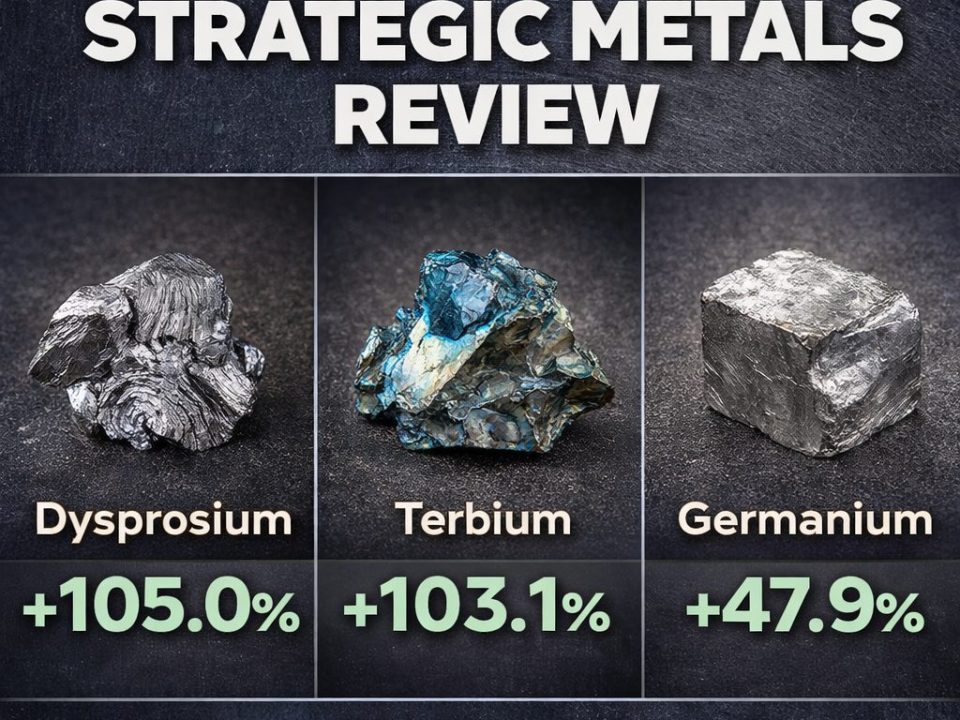
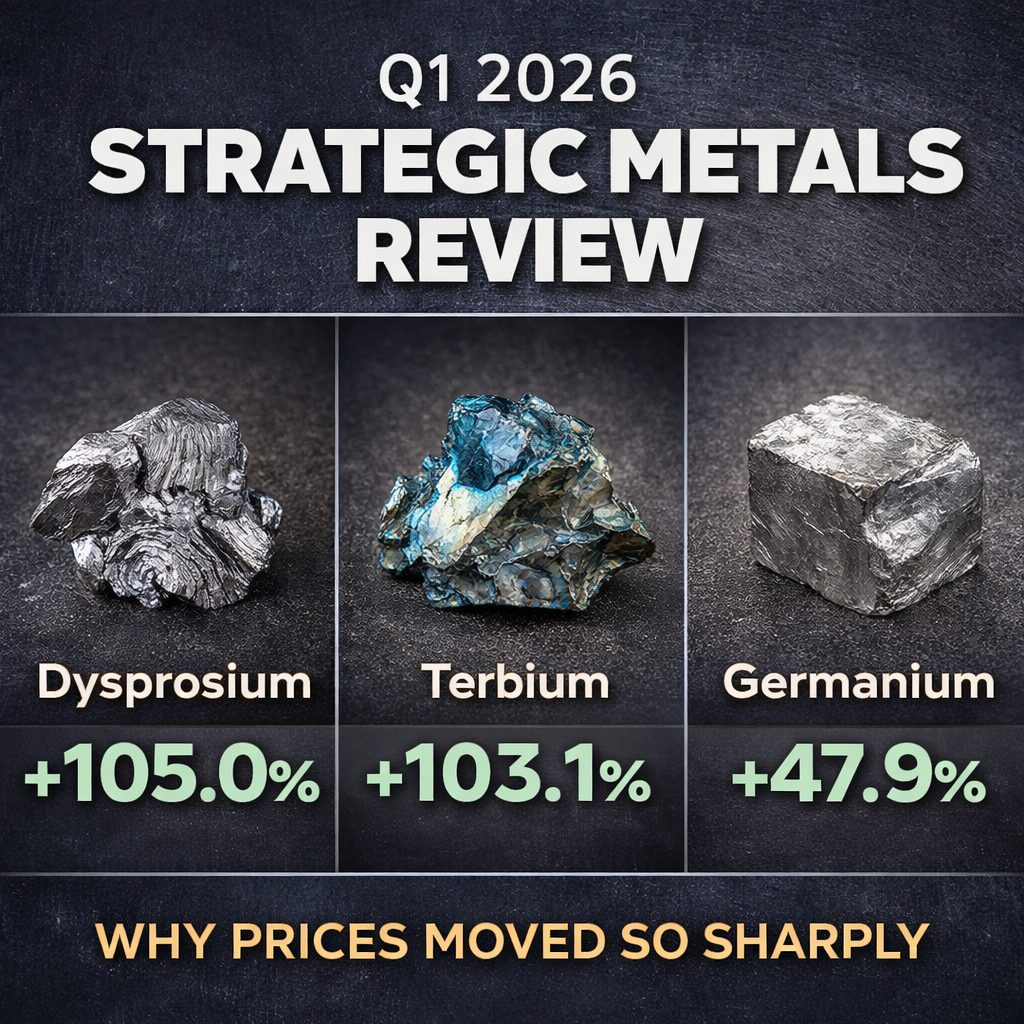
Since April, export controls have been in place on several elements in the rare-earth group, including dysprosium and terbium. How exports of these specific materials developed in November will only become clear in a few weeks, when the authorities release the second data set for the past month.
Beijing recently signaled a possible simplification of the licensing system, as reported by Reuters and other news outlets. However, the government intends to maintain the system introduced in April, which is modeled on the one that has applied to gallium and germanium since the summer of 2023. Both sets of measures were justified on national security grounds, as rare earths and the aforementioned technology metals are considered dual-use goods that can serve both civilian and military applications.
RARE EARTHS: CANADA AND THE US JOIN FORCES AGAINST CHINA’S DOMINANCE:
The Saskatchewan Research Council (SRC), operator of Canada’s first rare earth refinery, has partnered with REalloys to complete the supply chain.
Another step toward North American resource autonomy: The Saskatchewan Research Council (SRC), which operates Canada’s first rare-earth refinery, has entered into a partnership with REalloys. The U.S.-based company is building a vertically integrated rare earth supply chain, from mining to magnets. This includes developing the Hoidas Lake rare-earth deposit in Saskatchewan, Canada, as well as producing rare-earth metals and magnetic materials in Ohio, USA.
The collaboration with SRC could now complete the midstream portion of the supply chain: a five-year off-take agreement is planned for roughly 80% of the annual production of the Canadian processing facility in Saskatoon. In addition, REalloys plans to invest $21 million in expanding the SRC facility. Once completed, the plant could produce up to 600 tons of neodymium-praseodymium metal, 30 tons of dysprosium oxide, and 15 tons of terbium oxide annually. The two heavy rare-earth elements, dysprosium and terbium, are considered particularly critical because they are essential components of high-performance permanent magnets used in the defense and aerospace industries. At the same time, China, the main producer, has imposed strict export controls.
Use of Chinese Rare Earth Magnets in U.S. Military Systems Banned from 2027:
According to REalloys, the company supplies exclusively to “protected markets” in the U.S., including the defense sector and the national stockpile, where material sourcing is strictly regulated. The partnership with SRC is intended to meet these regulatory requirements. A new U.S. law stipulates that, starting in 2027, no rare earth magnets of Chinese origin may be used in domestic military systems. Instead, critical materials must come from “trusted domestic or allied producers.” Unlike the older regulations on which the new law was based, the new law now includes the entire supply chain: mining, refining, separation, melting, and manufacturing.
The SRC facility is expected to reach full production by early 2027. It can process monazite and made headlines in September 2024 for the first commercial production of rare earth metals in North America. The strategic significance of the facility is reflected not only in financial support from the Canadian government but also in bilateral supply chain development partnerships, for example, with Vietnam and France. Another Canadian rare earth refinery planned by mining company Vital Metals was put on hold in April 2023 due to economic feasibility concerns.
Meanwhile, REalloys plans to build its own, even larger facility in Saskatoon based on the new partnership, with production capacities including up to 200 tons of dysprosium metal.
USA RARE EARTHS: SMALL-SCALE REFINERIES FOR THE US MILITARY?
In March, Reuters reported that the U.S. military could soon build refineries for certain critical minerals on its bases—a move aimed at breaking China’s dominance in this sensitive sector. According to the agency, these plans are now gaining momentum.
Small-scale refineries are being developed essentially for the U.S. Army’s own needs, in collaboration with the Idaho National Laboratory and the mineral company Perpetua Resources. The Department of Defense and Perpetua have already worked together for several years to supply antimony products that meet military specifications. The metal could be mined at Perpetua´s site in Idaho, which primarily produces gold and silver. Due to its strategic importance for U.S. supply chains, the government has significantly expedited the necessary permitting processes.
According to Reuters, the military’s new plans will focus on antimony, which, as antimony trisulfide, is used among other things in ammunition production. Refineries for other minerals—such as tungsten, rare earths, and boron—could follow if the initiative proves successful.
RARE EARTHS FROM GREENLAND: PROCESSED IN ROMANIA?
Critical Metals Corp. plans to build a processing facility in Romania as part of a joint venture and supply it with material from its Tanbreez deposit.
US mining company Critical Metals Corp. (CRML) is developing the Tanbreez rare earth deposit in resource-rich Greenland. The material extracted there could soon be processed in Romania. CRML has announced a joint venture with Fabrica de Prelucrare a Concentratelor de Uraniu S.R.L. (FPCU), a subsidiary of Romania’s state-owned nuclear energy company Nuclearelectrica and a specialist in processing fuel-cycle materials.
Together, the partners aim to develop and operate a rare earth processing plant in Romania. CRML plans to supply the JV with 50 percent of its annual output from Tanbreez. The goal is to strengthen supply chains for civilian and military industries across the EU and NATO.
CRML CEO Tony Sage called the agreement a “monumental game-changer for the Western world.” The company, together with the Romanian government, now intends to apply for the EU’s recently announced €3 billion funding package for strengthening domestic raw material supply. CRML has already secured additional offtake deals, including with Canadian firm Ucore Rare Metals.
Tanbreez: A promising deposit with challenges Tanbreez is considered a key project for reducing global dependence on China, which dominates the processing of rare earths. The deposit reportedly contains nearly 30 percent of heavy rare-earth elements, those with the tightest supply. It also has lower levels of radioactive material compared to other Greenland deposits.
However, Tanbreez is an eudialyte-type deposit, meaning that overall rare earth concentrations are low. This makes extraction technically challenging and potentially costly. CRML therefore plans to examine how to optimize the process to improve efficiency.
TITANIUM PRODUCER TRONOX TO MOVE INTO RARE EARTHS WITH $600,000 IN FINANCING SUPPORT:
Joint backing from the United States and Australia follows the newly concluded critical minerals partnership.
Tronox is eyeing an expansion into the rare earth industry after receiving coordinated, conditional financing support offers from the Export-Import Bank of the United States (EXIM) and Export Finance Australia (EFA). The Stamford, Connecticut–based company is one of the world’s largest producers of titanium dioxide pigment, used widely in paint and coatings, for example. While Tronox already mines monazite-bearing tailings, it has not previously processed the rare earth elements it contains at scale.
The prospective financing package, worth up to $600 million, would fund mine extensions, infrastructure upgrades, and construction of a cracking and leaching facility in Western Australia. Tronox recently completed a pre-feasibility study and is now advancing toward a definitive feasibility study for the plant, which is designed to produce a mixed rare-earth carbonate containing both light and heavy rare-earth elements. The company has not yet disclosed whether it intends to refine this intermediate further or market it directly.
Coordinated Push From the United States and Australia:
The EXIM–EFA coordination follows the U.S.–Australia critical minerals framework, signed in October by U.S. President Donald Trump and Australian Prime Minister Anthony Albanese. The agreement commits both governments to mobilize more than US$1 billion each within six months to expand mining and processing capacity, supported by guarantees, loans, equity investments, insurance, and accelerated permitting. Two initial projects have already been approved under the partnership: Arafura will receive $100 million for the Nolans rare earth project, and Alcoa will receive $200 million to establish a gallium refinery in Western Australia. Support for Tronox suggests that Western governments are also looking at diversified miners to close gaps in the supply chains of critical minerals.
YTTRIUM SHORTAGE: US GOVERNMENT STEPS IN TO SUPPORT DOMESTIC INDUSTRY:
The U.S. government is supporting domestic gas-turbine producer GE Vernova in securing its raw-material supply, according to a Reuters report published Tuesday. The company is specifically affected by shortages of the rare-earth element yttrium, which is used in protective coatings that shield gas-turbine components from extreme operating temperatures. GE Vernova is also investing in potential substitutes for the material, despite possible cost and performance drawbacks, CEO Scott Strazik told the news agency.
Yttrium is among the rare-earth elements subject to strict export controls imposed by China in April, widely viewed as a response to U.S. tariffs. Although the White House announced after bilateral talks in late October that Beijing would ease these restrictions, no official confirmation from China has followed. According to Reuters, consumers of yttrium in sectors such as aerospace and semiconductors continue to face supply constraints. With inventories declining and prices surging, several media outlets have described the situation as an emerging rare-earth crisis.
Amid rising geopolitical tensions, the United States has recently increased its national strategic stockpile. Under certain conditions, including supply disruptions, materials from this reserve may be allocated to companies to meet both military and industrial demand for critical inputs.
USA RARE EARTH COMPANY APPARENTLY ON SCHEDULE TO START PRODUCTION IN 2018:
USA Rare Earth may be able to start extracting heavy rare earth elements in Texas two years earlier than originally planned. According to the company, rapid advances in building out its downstream processing stages are making this possible. A demonstration plant is currently being constructed in Colorado to separate dysprosium and terbium from the material mined in Texas. In addition, the facility will extract the technology metals hafnium and zirconium.
Pilot operations are scheduled to begin as early as early 2026, with full-scale mining in Texas expected by the end of 2028. Earlier this year, USA Rare Earth announced it had produced its first sample of dysprosium oxide. In September, the company acquired the British producer of rare earth metals and alloys, Less Common Metals, gaining valuable expertise for the next steps in the value chain. The overarching objective is to establish a fully vertically integrated mine-to-magnet supply chain within the United States.
EUROPE: EU TO SCRUTINIZE FOREIGN DIRECT INVESTMENT MORE STRICTLY:
Bloc seeks to protect key industries, including the critical raw materials sector.
The European Union on Thursday reached a provisional agreement to significantly strengthen its screening of foreign direct investment, introducing mandatory oversight across all Member States for transactions involving sensitive technologies, infrastructure, and critical raw materials. The deal, struck between the European Parliament and the Council, updates the EU’s 2020 framework and aims to reduce strategic vulnerabilities amid rising geopolitical tensions.
Under the revised regulation, Member States will be required to scrutinize foreign investments involving military and dual-use items, hyper-critical technologies such as AI, quantum and semiconductors, critical raw materials, essential energy, transport and digital infrastructure, electoral systems, and a defined set of financial market entities. The rules will also apply to EU-based subsidiaries of foreign companies. A shared database and potential single filing portal are intended to streamline cooperation and prevent circumvention.
Danish Industry and Business Minister Morten Bødskov said the agreement strengthens the EU’s ability to safeguard security and public order while maintaining its appeal to global investors.
The EU’s move comes as other Western economies tighten scrutiny of foreign investments. Australia and Canada, for example, have both announced more stringent reviews of critical minerals and sensitive technologies, while Ottawa has already blocked a planned sale of rare-earth material from a Canadian firm to a Chinese buyer and expanded national-security reviews in the mining sector.
AUSTRALIA BUILDS ITS FIRST GOVERNMENT-BACKED RARE EARTH PROCESSING FACILITY:
Australia’s Nuclear Science and Technology Organisation (ANSTO) is constructing a pilot facility designed specifically to process raw materials from clay-hosted deposits, a move intended to reduce China’s near-monopoly in this critical sector.
Global demand for rare earth elements (REEs) continues to rise, yet China still dominates both mining and, even more significantly, processing. Australia seeks to position itself as a strategic alternative and already hosts Lynas, a major producer that processes REEs domestically. Other companies, including Arafura and Iluka, are also pursuing expanded downstream capabilities. Until now, government support has focused mainly on grants and research initiatives. With the new Sydney facility, Australia aims to fill the remaining gaps across the rare-earth value chain.
According to a report by ABC on Friday, ANSTO has been commissioned to build a pilot plant that will process rare earths from ion-adsorption clay deposits. Unlike hard-rock deposits, these clays can be mined without blasting; rare-earth elements are extracted by chemical leaching. Such deposits are notably rich in the highly sought-after heavy rare earths — including terbium and dysprosium — which are subject to stringent Chinese export controls. Currently, commercial mining of ion-adsorption clays occurs only in China and neighboring Myanmar, and all processing is concentrated there.
ANSTO has previously received government funding to develop the required technologies and processing methods. The pilot facility is expected to begin operations next year. ABC reports that Australia Rare Earths has already signed on as the first supplier. The company is developing the Koppamurra deposit in southeastern Australia and plans to apply for a mining license next year. The facility will also be open to additional companies. According to Adrian Manis, Senior Advisor in ANSTO’s Minerals Division, shared access could eliminate the need for individual firms to build their own pilot plants, resulting in significant time and cost savings.
FIGURE OF THE WEEK: – $5 TRILLION A YEAR COULD BE REACHED IN CLEAN TEACH INVESTMENTS BY 2035