Weekly News Review December 22 – December 28 2025
December 28, 2025
Strategic Metals Performance in 2025 | Year in Review
January 13, 2026
The first full week of the year has already delivered several significant developments. China’s tightening of export controls on dual-use goods destined for Japan has renewed supply pressures on the country’s industrial sector. Meanwhile, the Australian government is considering introducing price floors and ceilings to support its domestic rare-earth mining industry.
All this and more from the editorial team @rawmaterials.net and @strategicmetals.com
AUSTRALIA CONSIDERS RARE EARTH’S PRICE FLOORS AND CEILINGS:
Australia is accelerating its critical minerals strategy, with rare earths increasingly treated as strategic assets rather than conventional raw materials. On Friday, the Association of Mining and Exploration Companies (AMEC) released a government-commissioned design paper proposing a Critical Minerals Strategic Reserve (CMSR).
The blueprint focuses on rare earth elements and outlines a production underwriting scheme that would support projects by providing guaranteed price floors and ceilings, thereby reducing investment risk.
The model draws parallels with U.S. rare-earth price-support mechanisms introduced last July, when the Department of Defense became the largest shareholder in MP Materials and issued offtake guarantees with clear price floors (as we reported). Following that move, Australia’s Minister for Resources, Madeleine King, signaled interest in similar measures Down Under. The now-proposed approach, however, goes further by capping upside returns as well: when prices exceed agreed-upon ceilings, producers would return a percentage to the government, limiting taxpayer exposure while maintaining price certainty during downturns.
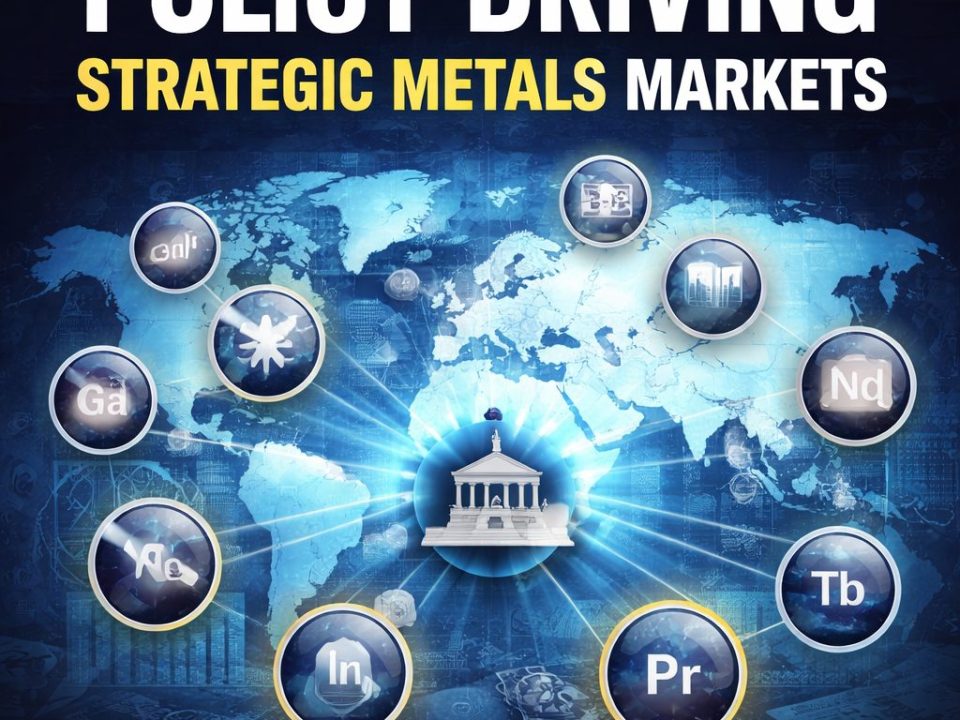
The CMSR targets the four magnet-critical rare earth elements: neodymium, praseodymium, dysprosium, and terbium. By focusing on these supply-chain chokepoints, the policy aims to stabilize production, reduce investment risk, and strengthen Australia’s role in global rare-earth supply chains.
RENEWED INTERNATIONAL BACKING FOR RARE EARTH PROJECT IN BRAZIL:
The Australian export credit agency has offered support to Australian mining company Viridis Mining and Minerals for the further development of its Colossus rare earth project in Brazil. Up to $50 million in funding could be made available, according to the agency. If finalized, this would mark the fourth instance of backing from a state-backed financial institution for Viridis.
Export credit agencies from Canada and France, as well as Brazil’s national development bank (BNDES), have previously expressed interest in supporting the project.
These commitments are complemented by private-sector investment. According to Viridis, the approximately US$286 million financing package is now effectively in place, bringing the project closer to a final investment decision (FID).
Viridis has already reported strong geological results from the Colossus project in recent years. In April 2024, the company announced recovery rates of up to 63 percent, among the highest globally for rare earth elements extracted from ion-adsorption clays. These clay-hosted deposits occur mainly in tropical and subtropical regions and are the primary source of heavy rare-earth elements such as dysprosium and terbium, which are scarcer and typically more valuable than light rare-earth elements like neodymium.
Currently, commercial production of ion-adsorption clay deposits is largely confined to China and neighboring Myanmar. However, several analysts see Brazil as a potential future producer, given its favorable geology. To increase domestic value creation, Viridis has also entered into a cooperation agreement to enable local downstream processing of the extracted material.
CHINA TIGHTENS EXPORT CONTROLS ON DUAL USE ITEMS TO JAPAN:
Japanese companies in the military sector, or those linked to it, are effectively cut off from Chinese supplies.
The Chinese government said on Tuesday it will strengthen export controls on dual-use items to Japan, banning shipments that could contribute to Japan’s military capabilities, according to a Ministry of Commerce announcement. The measures, issued under China’s Export Control Law, prohibit shipments of all dual-use goods to Japanese military users, for military purposes, or for any end-use deemed to enhance the country’s military strength. The controls take effect immediately.
Dual-use items are products, software, or technologies with both civilian and military applications. China has continuously expanded its list of export-controlled items in recent years, repeatedly flagging their dual-use nature. Beijing also added numerous critical minerals, including multiple rare earth elements, as well as technology metals such as gallium and germanium, to the list.
While not an outright export ban to the entire Japanese industry, companies in the military sector or linked to it are effectively cut off from Chinese supplies. The Chinese ministry added that organizations and individuals in any country or region that transfer or provide Chinese-origin dual-use items to Japan in violation of the rules will be held legally responsible.
The move comes amid heightened tensions between Beijing and Tokyo following recent comments by Japanese Prime Minister Sanae Takaichi on Taiwan and Japan’s approval of a record defense budget, Reuters reports. China regards Taiwan as its territory, a position rejected by the island’s government.
G7 TO ADDRESS RARE EARTHS AT HASTILY CONVENED MEETING:
According to media reports, a meeting is scheduled for next week.
After a period of relative calm, the issue of rare earth elements may soon return to the spotlight. Reuters, citing sources familiar with the matter, reported that the finance ministers of the G7 countries are expected to meet in Washington, D.C., on January 12 to discuss the supply situation for these critical raw materials.
All seven nations, Germany, France, Italy, Japan, Canada, the United Kingdom, and the United States, are heavily dependent on imports of rare earths from China. The United States, in particular, is currently advancing efforts to build a domestic rare-earth industry.
Initial reports emerged in September indicating that representatives of the G7, along with the European Union, which holds observer status within the group, had begun discussing the matter. One key topic was the introduction of price guarantees for non-Chinese mining companies to improve their competitiveness. This approach was reportedly inspired by the agreement reached last summer between MP Materials and the U.S. Department of Defense.
A similar model is now under discussion in Australia to further strengthen the country’s rare-earth industry. In addition to minimum price guarantees, policymakers are advocating for a mechanism to secure a share of revenues once prices exceed certain thresholds.
GREELAND CONSTRUCTION BEGINS ON PILOT PLANT FOR RARE EARTHS:
The U.S. mining company Critical Metals Corp. is advancing development of the Tanbreez rare earth deposit in Greenland. The company has now given the green light to construct a local pilot facility to store and pre-process material from future mining operations. Start-up of the pilot plant is scheduled for no later than May of this year.
Located in Qaqortoq, just a few kilometers from the mine site, the facility has been specifically engineered to withstand the harsh Arctic climate, according to CEO Tony Sage. Critical Metals considers the project a key milestone for its flagship Tanbreez asset. Only about a month ago, the company also announced plans to process part of the extracted material in Romania, underscoring its strategy to build an international value chain.
Tanbreez is regarded as one of the largest known rare earth deposits worldwide. The proportion of heavy rare earth elements, including terbium and dysprosium, both considered particularly critical due to supply constraints, is estimated at at least 25 percent. Compared with other Greenlandic deposits, Tanbreez is also said to contain lower levels of radioactive material.
Geological studies further indicate the presence of significant quantities of zirconium, niobium, gallium, and hafnium. However, some analysts remain skeptical about the project’s economic viability. The primary host mineral, eudialyte, contains relatively low overall concentrations of rare earth elements, making extraction technically complex and potentially cost-intensive.
EU COUNTRIES APPROVE MERCUSAR AGREEMENT:
After more than 25 years of negotiations, the path is clear for a trade agreement between the European Union and the South American Mercosur bloc. On Friday, ambassadors of the EU’s 27 member states signaled sufficient support, according to media reports citing diplomatic sources. Governments must formally confirm the vote by this afternoon, with majority approval also considered assured. As early as next week, European Commission President Ursula von der Leyen and European Council President António Costa plan to travel to Paraguay, alongside Argentina, Brazil, and Uruguay, a member of Mercosur, for the signing ceremony.
The protracted negotiations were repeatedly marked by disputes and stalemates. Following a political agreement reached at the end of 2024 (we reported), the signing was once again delayed by more than a year, in part due to protests by farmers in countries such as France, Italy, and Poland.
According to the EU, the agreement would create the world’s largest free-trade area, encompassing more than 700 million people. It would account for nearly 20 percent of global economic output and over 31 percent of worldwide goods exports. On the EU side alone, exporters could save more than €4 billion in tariffs per year.
South America’s Raw-Materials Potential:
Supporters of the agreement also expect improved access to critical raw materials for Europe’s key industries. Argentina’s lithium deposits, an essential battery metal, rank among the largest in the world. Brazil hosts the world’s second-largest rare-earth reserves after China; the predominant deposit type there also contains high concentrations of particularly sought-after heavy rare-earth elements.
Resource-rich Bolivia has meanwhile joined the Mercosur bloc, though it is not yet covered by the free-trade agreement.
These countries aim to significantly expand production of critical raw materials while strengthening local value creation. In this context, the EU is increasingly positioning itself as a reliable partner for South America, and corporate cooperation between the two regions is gaining momentum.
That considerable potential, however, is offset by substantial challenges. Following the planned signing, approval by the European Parliament and ratification by member states are still required—processes that could take years. Experience also shows that compliance with environmental standards, the development of necessary infrastructure, and the permitting of new mines and processing facilities are highly time-consuming.
Moreover, competition is intense: China has long been active in South America and has secured strategic positions through investments, offtake agreements, and infrastructure projects. Particularly in lithium, copper, nickel, and rare earths, China often serves as both capital provider and technology partner.
The signing of the Mercosur agreement, therefore, marks a pivotal step toward diversifying Europe’s raw-materials supply—but it is by no means a guaranteed success.
FIGURE OF THE WEEK: – 10% of China’s domestic rare earth demand are met by recycling measures.