
Why Price Alone Doesn’t Tell the Full Story in Strategic Metals
January 26, 2026
Weekly News Review January 26 – February 1 2026
February 1, 2026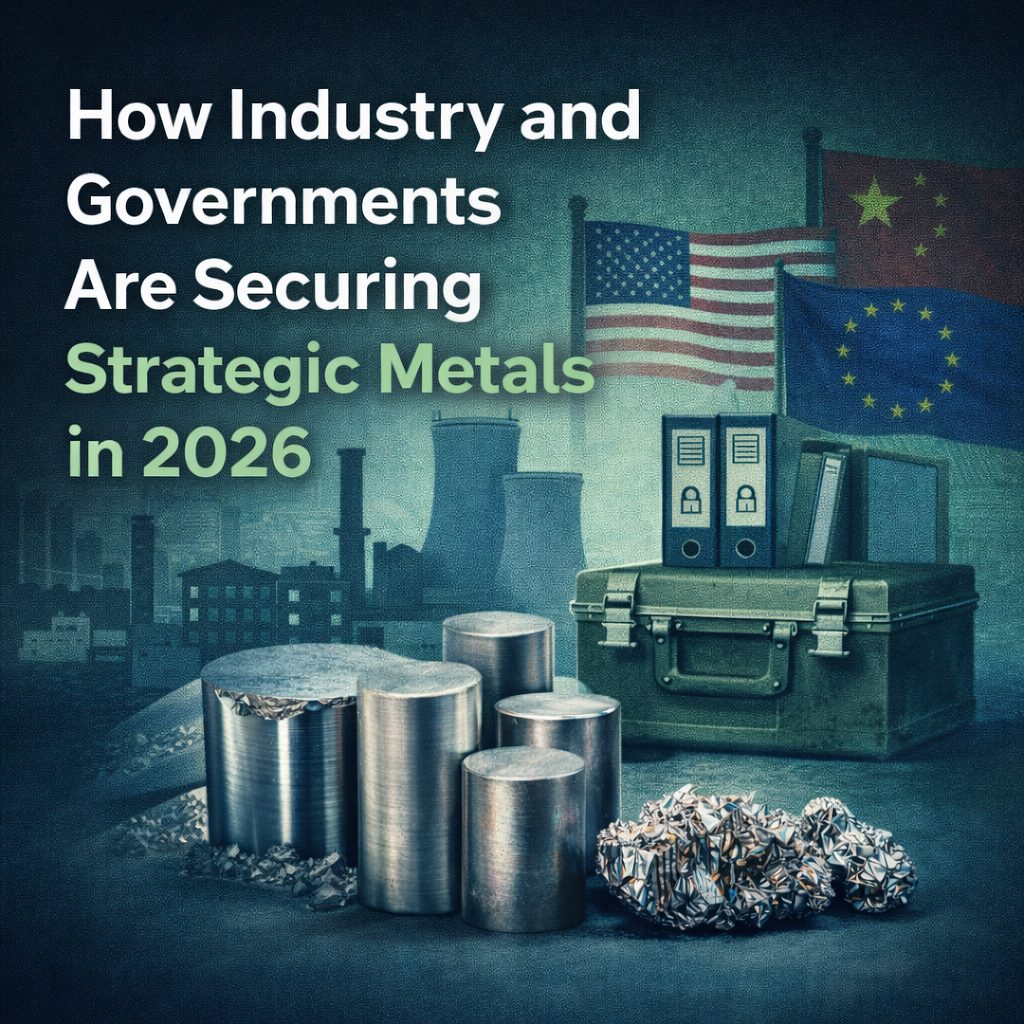
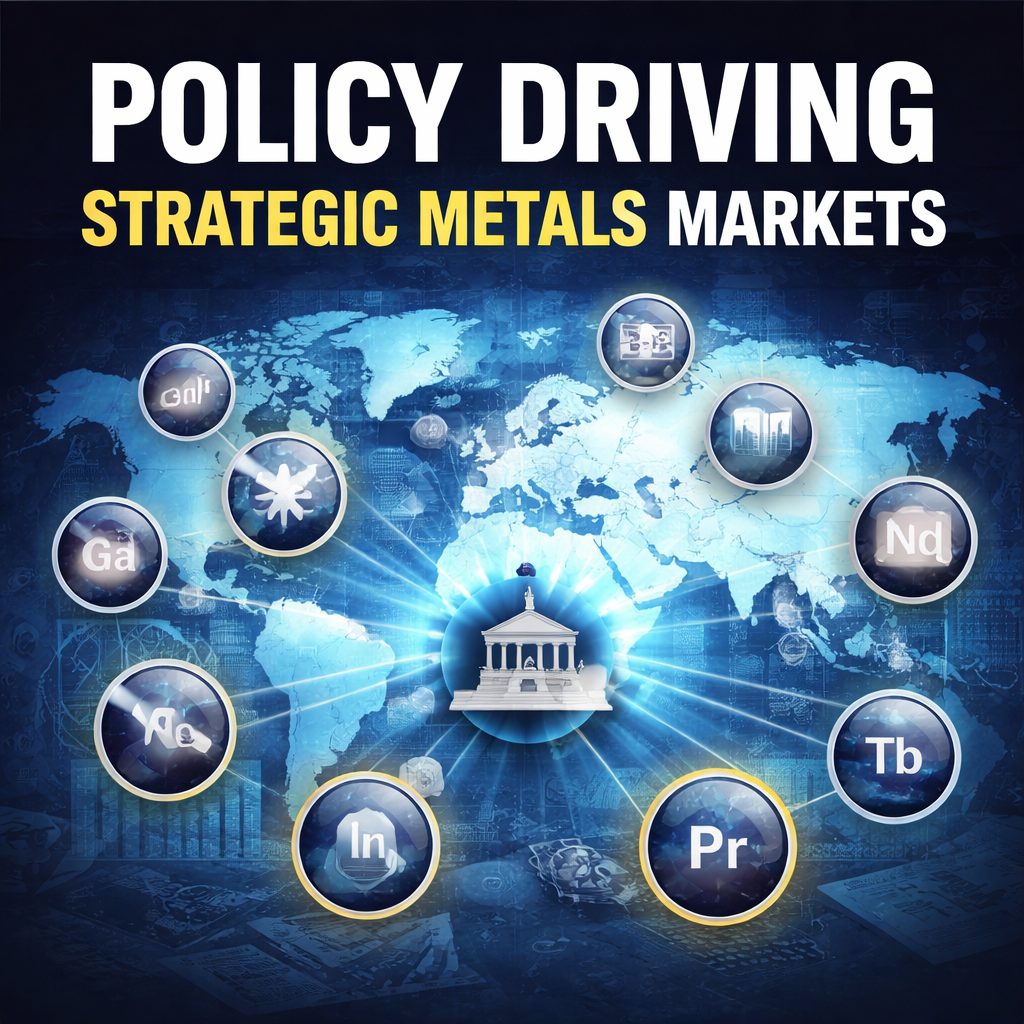
This article looks at how industry and governments are actively securing strategic metals in 2026, and how that behaviour is reshaping availability across the market.
Over the past two weeks, we’ve looked at how the strategic metals market has changed structurally, and why availability often matters more than published prices.
This week, we want to look at what is driving those dynamics.
More specifically, how industry and governments are actively securing strategic metals as we move further into 2026.
From Open Markets to Secured Supply
For many years, strategic metals were sourced quietly in the background. Supply chains were global, flexible, and largely taken for granted.
That assumption no longer holds.
Across a growing number of metals, access is now shaped by long-term contracts, stockpiling decisions, and policy priorities rather than short-term purchasing. This is happening not because of speculation, but because these materials sit at the foundation of modern industry.
Once that becomes clear, behaviour changes quickly.
Industry Is Planning Further Ahead
Industrial users of strategic metals are increasingly focused on continuity rather than price optimisation.
For manufacturers, a temporary interruption in supply can be far more costly than paying a higher reference price. As a result, many companies are now securing material earlier, locking in volumes, and prioritising reliability over flexibility.
This behaviour tends to tighten availability before it becomes visible in published data.
Governments Are Now Active Participants
At the same time, governments are no longer acting as neutral observers.
Strategic stockpiles, domestic processing initiatives, and supply-security programmes are becoming standard tools. In some cases, governments are supporting local production. In others, they are ensuring access to material for critical industries through direct procurement.
These actions are not short-term responses. They reflect a broader recognition that strategic metals underpin infrastructure, defence, energy systems, and advanced manufacturing.
What This Means for the Market
When both industry and governments plan further ahead, the market itself changes.
Material flows become more structured. Availability becomes more selective. And access increasingly reflects long-term priorities rather than short-term price signals.
This helps explain why strategic metals often behave differently from exchange-traded commodities, and why traditional price-focused analysis can miss what is actually happening beneath the surface.
Looking Ahead
As we continue this series, the next step is to look at how these dynamics affect individual metals differently, and why relevance can shift over time depending on technology, policy, and industrial demand.
That will be the focus of our next post.
As always, please don’t hesitate to contact us if you’d like to discuss how physical strategic metals can be added to your portfolio.