Weekly News Review September 7 – September 13 2026
September 13, 2026
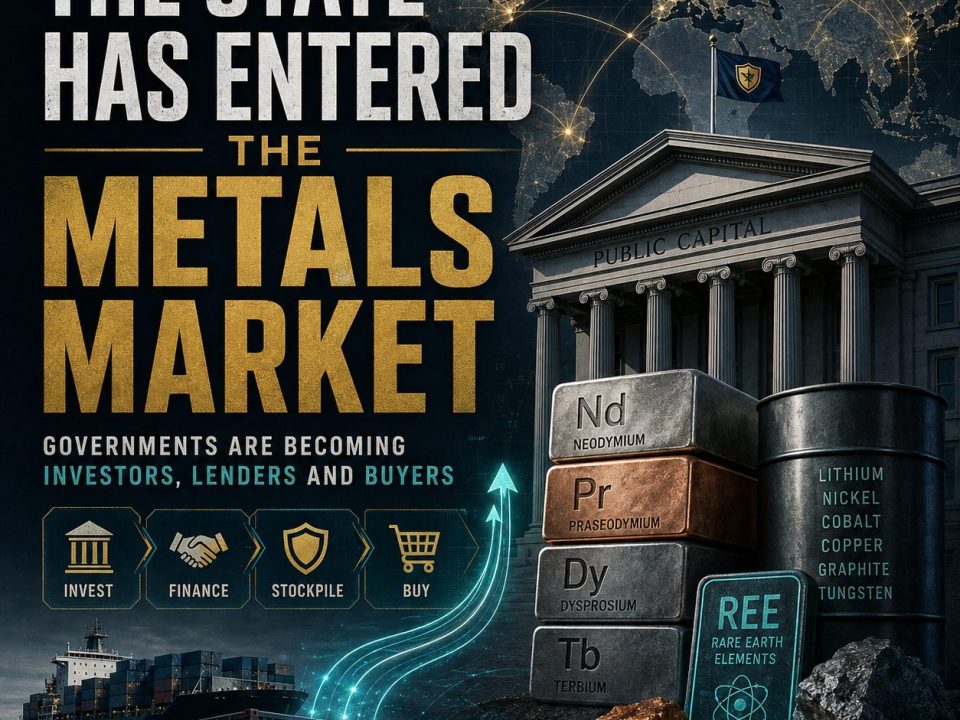
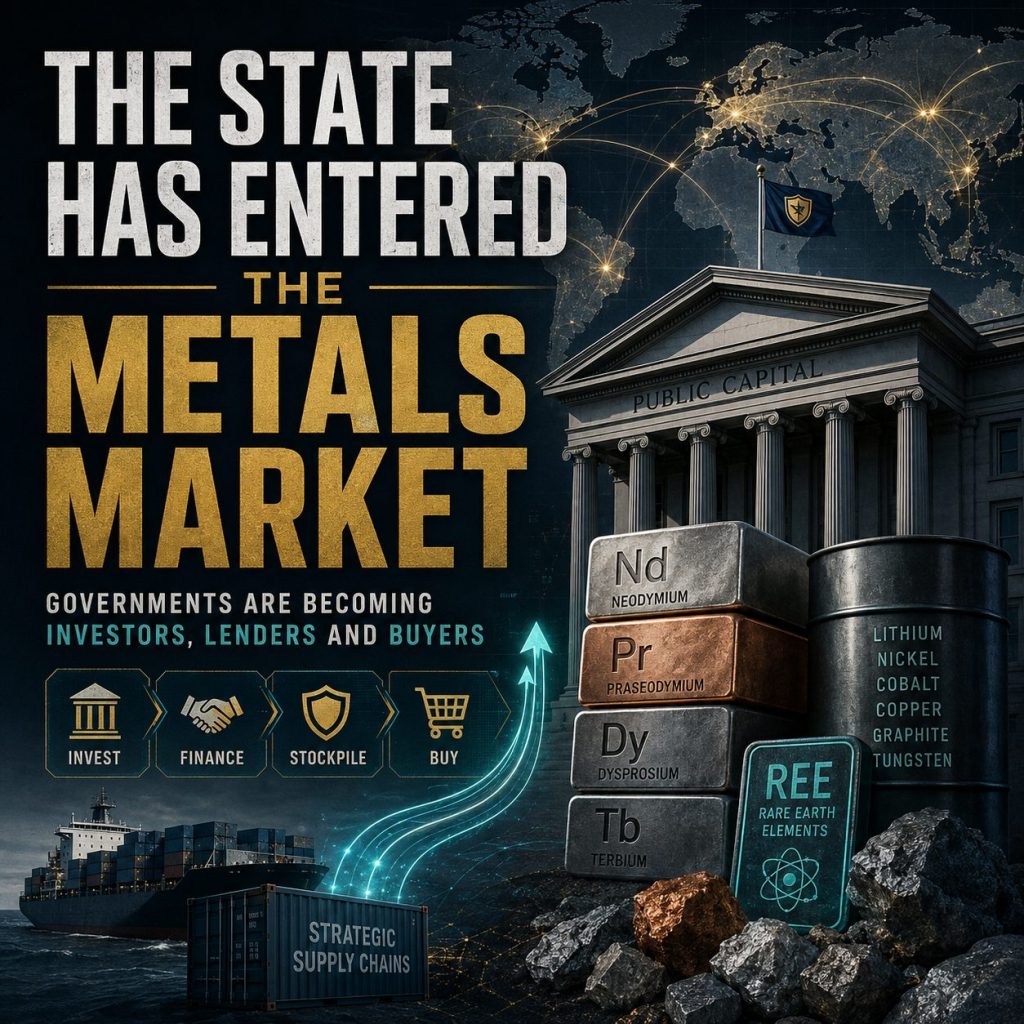
Nearly half a billion US dollars for tungsten: the US Department of Defense is investing heavily in strengthening domestic supply chains. Meanwhile, Estonia has begun commercial production of rare earth magnets. We have summarized the week’s key developments in our latest roundup.
PENTAGON INVESTS IN TUNGSTEN PRODUCTION:
The technology metal has numerous applications in military technology.
The U.S. Department of War is investing $450 million in the tungsten supply chain. The financing will take the form of redeemable preferred equity in the Elmet Group. Unlike a traditional grant, this gives the U.S. government an equity stake in the company that Elmet can later repurchase. With the funding, the company plans, among other things, to expand its existing production facilities in the United States, strengthen processing capacity for ammonium paratungstate (APT), an important intermediate product in tungsten processing, and secure additional raw material sources in the United States and allied countries.
According to the Pentagon, the Elmet Group is the only fully integrated U.S. manufacturer of tungsten and molybdenum materials and components.
In the military sector, tungsten is used, among other applications, in advanced armor and armor-piercing ammunition, while molybdenum plays an important role in producing steel alloys. China holds a high share of the global market for both raw materials.
EU PLANS TO EXPAND CRITICAL MATERIALS STOCKPILES:
In her State of the Union address, Ursula von der Leyen announced a new initiative to facilitate joint procurement and stockpiling of key materials.
European Commission President Ursula von der Leyen wants to expand Europe’s stockpiles of critical raw materials. She announced the plans on Wednesday in her annual State of the Union address to the European Parliament in Strasbourg.
A new “European Corporation on Critical Raw Materials” is intended to support joint procurement and stockpiling of materials needed for electric vehicles, chips, batteries, clean tech and military technologies, among other applications. The bloc still relies on China for more than 80 percent of its supply of many critical raw materials, and 90 percent for some rare earths, von der Leyen said. Despite progress, Europe must further diversify its supply sources, especially as other countries pursue the same goal.
First Steps Toward Shared Raw Material Stockpiles Already Taken:
The plans build on earlier measures to strengthen Europe’s raw material supply. In her 2022 State of the Union address, von der Leyen predicted that lithium and rare earths would soon become “more important than oil and gas” and announced the Critical Raw Materials Act (CRMA).
The legislation, which entered into force in May 2024, sets 2030 targets in areas including domestic mining and recycling of certain raw materials. It also provides for initial steps toward shared EU stockpiles of strategic materials, such as closer supply-chain monitoring.
These plans took more concrete shape in late 2025 with the RESourceEU action plan. In April 2026, the EU also launched a joint raw material procurement platform to pool demand from European companies and help secure better prices and more reliable supply terms.
BRICS CALLS FOR GREATER VALUE ADDITION IN RESOURCE-RICH COUNTRIES:
Resilient supply chains and closer cooperation on diamonds and precious metals announced.
At their summit in New Delhi, the BRICS countries* agreed on a joint declaration that calls, among other things, for diversified and more resilient supply chains for critical minerals. Resource-rich countries should benefit more from value addition and economic diversification. At the same time, the declaration explicitly emphasizes countries’ sovereignty over their mineral resources and their right to adopt measures to pursue legitimate public policy objectives. The declaration also highlights critical minerals as essential for low-emission energy technologies, energy security, and resilient energy supply chains.
In his closing remarks, Indian Prime Minister Narendra Modi warned that using technology and critical minerals as political or economic leverage could hinder shared progress. He did not explicitly name China. Last year, however, Chinese export restrictions on rare earths and permanent magnets affected India’s automotive industry and intensified the country’s efforts to build more resilient supply chains.
Closer Cooperation on Diamonds and Precious Metals:
The BRICS declaration also addresses trade in diamonds and precious metals and explores ways to promote such trade within the bloc and on the global market. To this end, cooperation with African diamond-producing countries will be strengthened. At the same time, the Kimberley Process, aimed at preventing the trade in conflict diamonds, will continue to play a central role.
RARE EARTH MAGNETS: NEO BEGINS COMMERCIAL PRODUCTION IN ESTONIA –
Neo Performance Materials has begun commercial production at its magnet plant in Narva, Estonia. According to Neo, it has delivered initial shipments of sintered rare earth magnets to a supplier of electric vehicle drive motors. Previously, the company had provided only samples for testing. Production for other awarded contracts is expected to begin by the end of 2026.
The magnet plant opened in September 2025. Its first phase is designed to produce around 2,000 metric tons of magnets annually. Neo did not disclose its current output. Neo is planning an expansion to around 5,000 metric tons per year.
Near the magnet plant, Neo already operates a light rare earth refinery in Sillamäe. In April, the company also commissioned a line to separate heavy rare earths, including dysprosium and terbium.
Neo’s facilities in Estonia contribute to the development of a European rare earth supply chain. To that end, the Canadian company is working with partners including French rare earth processor and recycler Carester.
Despite the measures taken and progress made so far, including by companies, securing the EU’s raw material supply remains a challenge, as the European Court of Auditors highlighted in a report earlier this year.